
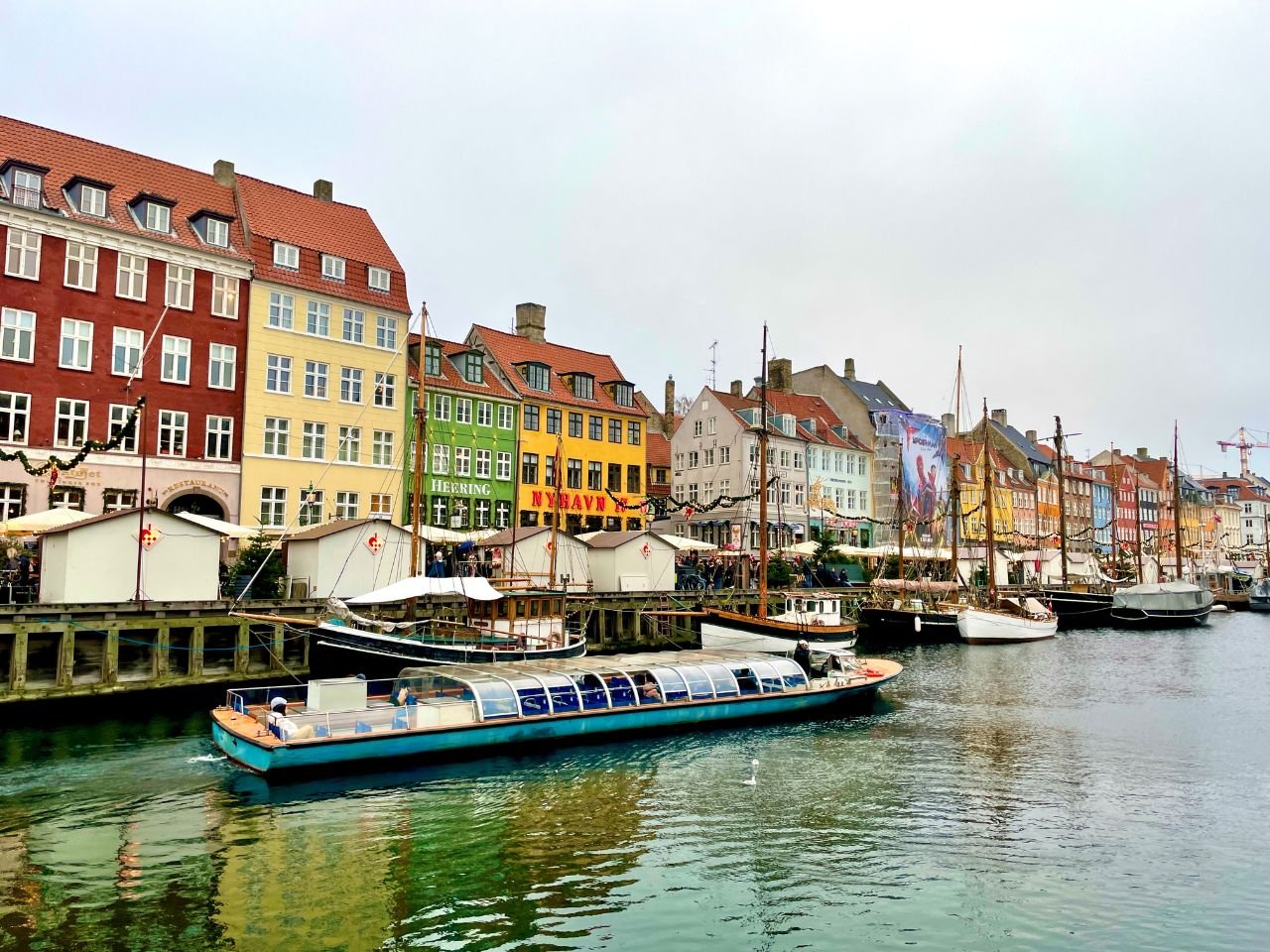
Is Copenhagen Expensive? Complete Cost Guide 2026


Thinking of visiting Copenhagen but worried about your budget? You’re not alone.
One of the most common questions travelers ask before coming here is: “Is Copenhagen expensive?”
And let’s be honest—Denmark’s capital does have a reputation for being one of the priciest cities in Europe. From food and drinks to accommodation and transport, costs can add up quickly if you’re not prepared.
I’ve been living in Denmark for a while now, and I’ve personally experienced the high prices.
In this article, I’ll give you a clear picture of what’s expensive and what’s surprisingly affordable. Though costs are always relative, knowing what to expect helps a lot while planning for a Copenhagen trip.
So, let’s break it down together and find out if Copenhagen is expensive to travel to.
In This Post:
Why is Copenhagen Expensive?
Here’s the answer to your big question—why is Copenhagen expensive? It mainly comes down to the high taxes.
Taxes are high in Denmark, and that makes the overall cost of living and daily expenses higher, too.
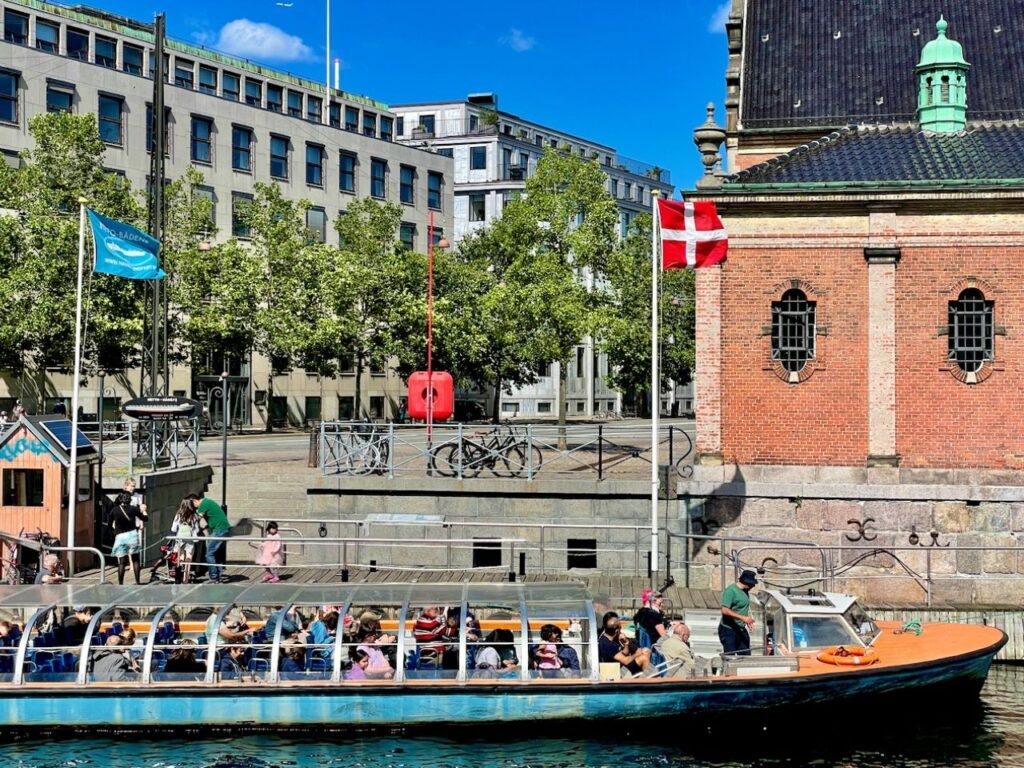
Denmark is one of the top three highest tax-paying countries in the world, with rates ranging from 36% to 55%. It directly adds to the cost of living and makes everyday expenses higher.
Danes pay a 25% VAT on almost everything, and they’re okay with it because it helps fund their well-run society – free healthcare, free education, solid pensions, good infrastructure, and a bunch of other public and social perks.
The upside is that locals earn good salaries—an average Dane makes around 50,000 DKK (€6,693/$7,844) a month before tax—so while life is balanced for them, Copenhagen is expensive for tourists to visit.
Note: Even though Denmark is part of the EU, the Euro isn’t the official currency here. Denmark uses the Danish Krone, written as DKK and often called “krones” or simply “kr.” 1 Euro equals 7.46 DKK with the fluctuation band of ±2.25%.
How Expensive is Copenhagen?
Numbeo ranks Denmark as the 7th most expensive country in the world for the cost of living in 2025.
As costs are always subjective, how expensive it feels really depends on where you’re coming from. If you’re used to Swiss prices in Zurich, Copenhagen might feel reasonable. But if you’re flying in from a city like Bangkok, the cost will feel shockingly high.
Compared to Southern and Eastern European cities like Lisbon, Madrid, Venice, or Budapest, Copenhagen is definitely pricier.
Compared to Western Europe, Copenhagen can feel a bit pricier than Paris or Amsterdam, especially when it comes to eating out or having a drink.
That said, it’s not pricier than two of its Nordic neighbors – Iceland and Norway but sits right in line with its Scandinavian neighbours like Stockholm and Oslo, where the high cost of living is pretty similar to Copenhagen.
Here’s a quick example: 500 ml of water in Copenhagen can cost about 25 DKK (€3.3 / $3.9), and a coffee costs around 40 DKK (€5.3 / $6.3).
Note: If you’re curious about exact numbers and want to compare Copenhagen’s prices with other EU countries in 2024, you can check the official data here. To compare the cost in Denmark to the world, refer here.
How much does a trip to Copenhagen cost? Full Breakdown
On average, you can expect to spend around 670 DKK (€90/ $105) per person per day if you’re sticking to a budget. That usually covers food, transportation, and a few activities.
To give you a bigger picture, a one-week trip for two people (excluding flights) can easily add up to around 5,000 DKK (€669 / $784) for a budget-friendly itinerary. Of course, this is just an estimate—your actual expenses will depend a lot on your travel style.
So, is Copenhagen expensive to travel in 2026? Yes, Copenhagen is a pricey destination. But with smart planning—like traveling off-season, using tap water instead of buying bottles, and adding free activities to your itinerary —you can enjoy the city without overspending.
Here’s a sample daily expense table for 2026, based on my own experience living in Copenhagen and real prices from restaurants, hotels, and other local sources.
| Expense (for one person per day) | Low Budget | Mid Range | Luxury |
| Accommodation | 170 – 275(€23/ $27 – €37/ $43)Hostels and budget stays | 800 – 1800(€107/ $125 – €241/ $283)Nicer boutique hotels | 2500 – 11000(€335/ $392 – €1472/ $1726)5-Star hotels at a prime location |
| Food & Drinks (3 times) | 200 – 300(€27/ $32 – €40/ $47)Street food/ supermarkets | 500 – 700(€67/ $36 – €79/ $110)Casual dine-in restaurants | 1200 – 5000+(€161/ $188+ – €669/ $785+)Fine dining/ Michelin star restaurants |
| Transport | 0 – 100(€13/ $16)walking/24-hour city pass small | 150(€20/ $24)bike rental for 24 hours | 600(€80/ $94)1-4 passenger taxi for one hour for a 20 Km distance |
| Activities/ Attractions | 0 – 200(€27/ $32) | 400(€54/ $63) | 500+(€67/ $78) |
| Other | 0 – 50(€7/ $10)taxes and fees | 100(€13/ $16) | 250(€33/ $39) |
| Total | 370 – 925(€50/ $58 – €124/ $145) | 1950 – 3150(€261/ $306 – €422/ $494) | 5050 – 17350(€676/ $792 – €2322/ $2722) |
How Much Does it Cost to Stay in Copenhagen?
Accommodation in Copenhagen is definitely pricey compared to many other cities in Europe. But Copenhagen offers accommodation for every type of traveler.
A bed in a shared dormitory usually starts at around 170 DKK (€23 / $27) per night, while a private room in a hostel costs 600 DKK (€80/ $94). Airbnb prices start from 600 DKK (€80 / $94) a night, but it’s a good deal if they have a kitchen, so you can cook your own food, saving money on meals.

Hotels often spike their prices, especially during the summer and Christmas seasons. But if you visit in the off-season and book in advance, you’ll find much cheaper deals. So, yeah, accommodation rates depend on the season you’re visiting.
Here are a few of the best places to stay for each budget, considering the location, facilities, and more.
- Budget: Next house Copenhagen, Steel house Copenhagen
- Mid-Range: 71 Nyhavn, Copenhagen Admiral Hotel
- Luxury: Nimb Hotel
How Expensive is Transport in Copenhagen?
Public transport costs in Copenhagen are affordable. A single ticket price for public transport (buses, trains, and metro) for 2 zones is 24 DKK (€3.2 / $3.7). It is on par with the overall cost of living here.
The most affordable way to get from Copenhagen Airport to the city center is by metro, train, or bus, all costing 30 DKK (€4 / $4.7). If you opt for a taxi instead, the same trip will cost you anywhere from 350 DKK (€47 / $55) to 500 DKK (€67 / $78).

Renting a car in Copenhagen is expensive. Trust me, tolls, gas, and parking fees are insanely expensive in Denmark. And you make a mistake, the fines are insanely high.
Taking a city pass or a day pass in Copenhagen saves a lot of money. Also, the Copenhagen card includes free transportation in addition to free access to several attractions across the city.
Since all taxis in Denmark are metered, you pay based on both time and distance, which can add up quickly. You should avoid taxis at all costs if you want to save money in Copenhagen.
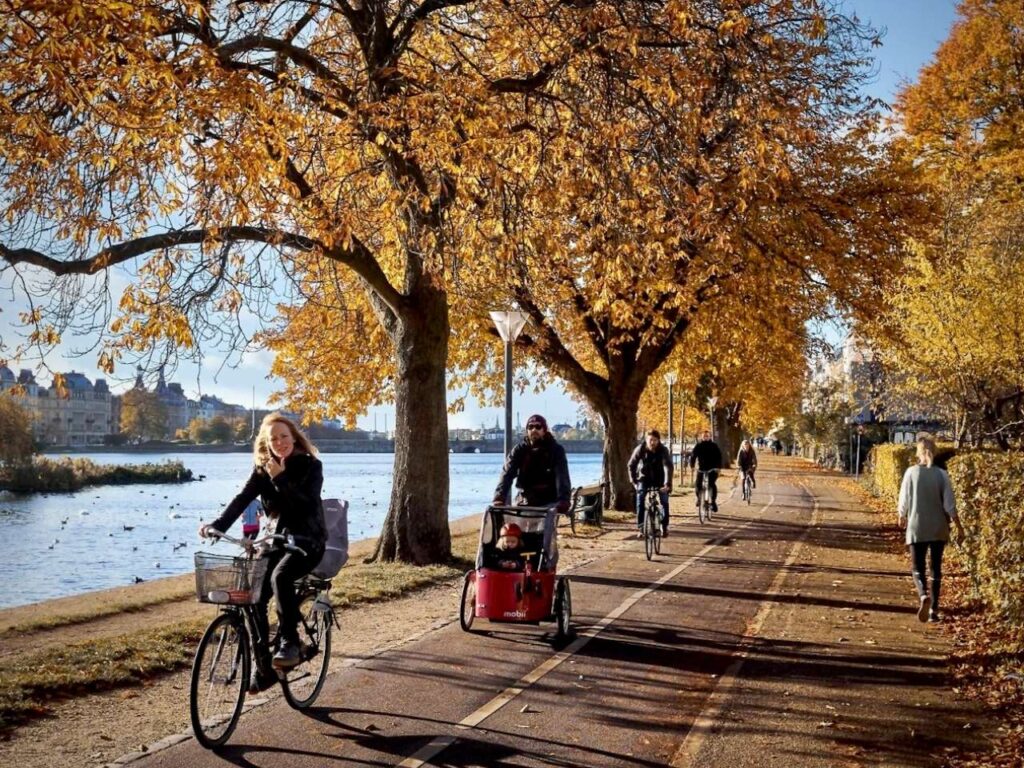
Copenhagen is a bike-friendly city, and it is hands down the most fun way to get around. You can rent a bike for 150 DKK (€20 / $24) for 24 hours.
After living here for years, I can definitely say that it’s completely possible to explore this city without ever stepping into a taxi.
How Expensive is Food in Copenhagen?
Copenhagen’s food scene is known for its high costs. Simply said, Copenhagen is expensive to eat and drink (at dine-in restaurants!)
A basic meal at a casual restaurant usually costs between 59- 150 DKK (€7.9/ $9.3 – €20/ $24), which doesn’t sound too bad at first. But if you add up three meals a day, it’s not budget-friendly.

When I eat out, I usually end up paying around 150–200 DKK (€20/ $24 – €27/ $31) for a meal. That’s why most days, I cook at home.
Even the smaller roadside eateries and food markets often feel pricey compared to other parts of Europe, but they do deliver in quality. Bakeries, for example, are a huge part of Danish culture, but they aren’t cheap. A pastry and a coffee can easily cost you 70 DKK (€9.3/ $11).
Coffee in general is pricey here, usually around 40 DKK (€5.3/ $6.3) depending on where you grab it.
Brunch in Copenhagen starts from 100 DKK (€13 / $16) and goes upwards. Dinner for two at a nice but not overly fancy place will likely cost you 300 DKK (€40 / $47) or more.
Here are some updated 2025 prices for everyday foods and groceries so you get a clearer idea:
- 1 liter of milk with 3.5% fat: 15 DKK
- 1 loaf of bread: 15-25 DKK
- 1 kg apples: 20 DKK
- 1 kg potatoes: 20 DKK
- 1 kg full uncooked chicken: 60-80 DKK
- 12 large eggs: 25-30 DKK
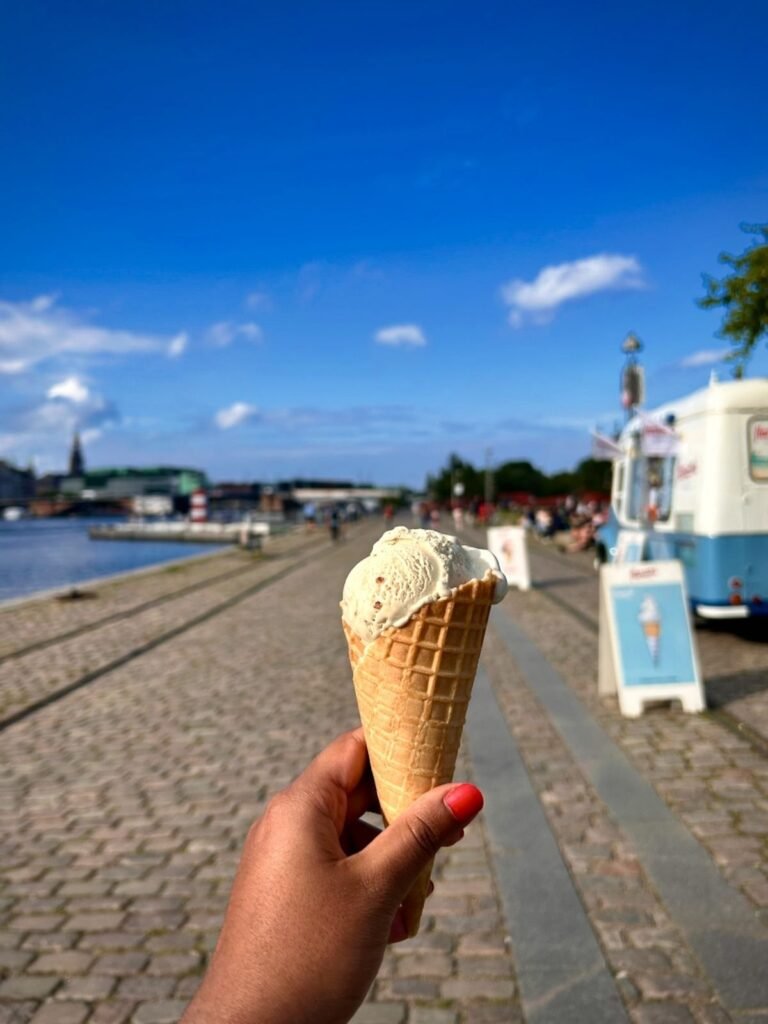
- 1 scoop of Ice cream: 35 DKK
Keep in mind that Denmark has a 25% VAT included in all food prices too, which is one reason meals here feel expensive. If you’d like to compare prices with other EU countries, you can check the official data.
Did you know? Denmark also holds the Guinness World Record for the highest organic produce per capita. With annual organic retail sales of around £220 million ($349.2 million).
Is Alcohol Expensive in Copenhagen?
The price of alcohol can be steep at restaurants and bars, but at supermarkets, alcohol is much more affordable.
For instance, a can of 50 cl (500 ml) Beer in a supermarket costs around 6 DKK (€0.8 / $0.9), while the same costs 40-60 DKK (€5.3 / $6.3 – €8 / $9.4) in dine-in restaurants, breweries, and bars.

Local craft beers at breweries and distilleries are priced around 70 DKK (€9.3 / $11) for 40 cl. But if you want a cocktail, expect to pay around 100 DKK (€13 / $16).
Alcohol is comparatively cheaper in Copenhagen than in other Scandinavian countries like Norway, Sweden, and Iceland.
Did you know? Beer is often cheaper than bottled water in Denmark, which is why people joke, “Save water, drink beer.”
Are Tourist Attractions expensive in Copenhagen?
Tourist activities in Copenhagen tend to be quite costly, and I’ll be honest, the costs add up quickly if you plan on doing a lot of the paid ones. You can mix a few paid highlights with the many free experiences the city offers.
Most museums and entry fees range between 50 DKK (€7 / $8) and 300 DKK (€40 / $47) per adult, while guided tours and food tours usually cost a bit more, depending on the experience and duration.

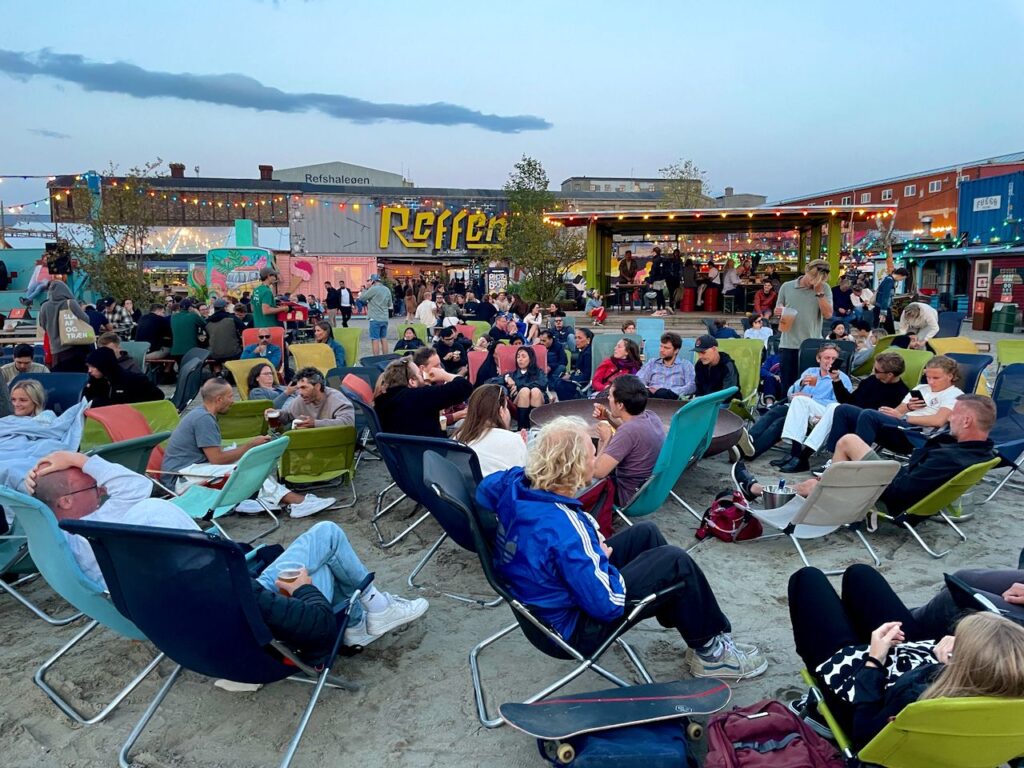
Many attractions in Copenhagen offer free entry on certain days, such as once a week or during special events like Culture Night.
Here are a few tourist attraction entry fees for adults and tour prices in Copenhagen for your reference.
- Copenhagen Zoo – 249 DKK (€33 / $47)
- Amalienborg Palace – 125 DKK (€17 / $20)
- Rosenborg Castle – 140 DKK (€19 / $22)
- Tivoli Gardens Entry (without rides) – 190 DKK (€25 / $30) on weekdays and 210 DKK (€29 / $34) on weekends and public holidays.
- National Museum of Denmark – 140 DKK (€19 / $22)
- Canal Tour – 169 DKK (€23 / $27)
- Home of Carlsberg Exhibition – 215 DKK (€29 / 34)
Frequently Asked Questions
How much is a cup of coffee in Copenhagen?
A large cappuccino in Copenhagen costs around 45–50 DKK (€6 / $7 – €7 / $8) at cafés like Coffee Collective or Andersen Bakery, while McDonald’s offers one for about 22 DKK (€3 / $3.6).
How expensive is parking your car in Copenhagen?
Parking in Copenhagen city center costs about 50 DKK (€7 / $8) per hour and 350 DKK (€47 / $55) per day, and the prices decrease the farther you are from the city. Most accommodations charge extra for parking, so better to check before booking.
Should you carry cash in Copenhagen?
Most places in Copenhagen accept cards, and I actually never used cash. It’s good to have about 500 DKK (€67 / $78) for emergencies, but you’ll be just fine using your credit card almost everywhere.
Can I travel to Copenhagen on a budget?
Yes, you can travel to Copenhagen on a budget if you plan ahead and use smart hacks like staying in hostels, biking, cooking your own meals, and mixing free activities with a few paid ones.
Is Denmark expensive for Americans?
Denmark isn’t always more expensive than the U.S. Housing is often cheaper, dining out costs more, and public transport is more affordable. That said, overall living expenses, especially daily costs, can end up higher than in the U.S.
Is Copenhagen more expensive than Stockholm?
Yes, Copenhagen is more expensive than Stockholm. Both Scandinavian cities are pricey by European standards, but Copenhagen tops the list. In fact, the cost of living including rent is about 17.5% higher in Copenhagen compared to Stockholm.
Is Copenhagen more expensive than Amsterdam?
Copenhagen and Amsterdam are fairly comparable. Groceries are cheaper in Amsterdam and housing is pricier there, while Copenhagen has cheaper transport and dining out costs more. Overall, both cities balance out depending on what you spend most on.
Is Copenhagen more expensive than London?
Copenhagen and London are similarly expensive. Rent is generally cheaper in Copenhagen, but groceries, dining out, and everyday expenses cost more. London can be pricey for accommodation and transport. Overall, the difference is small, and both cities are among the world’s more expensive destinations.
Final Thoughts: Is Copenhagen Expensive to Visit in 2025?
The short answer is yes! Now that you know the cost of accommodation, transportation, food, drinks, activities, and tours, you’ll understand that a trip to Copenhagen is definitely not cheap.

However, it doesn’t have to be super expensive. Visiting the city on a budget is definitely possible, and with the right planning, it is not hard at all.
Plan wisely, and you’ll see why so many travelers fall in love with this vibrant city despite its high prices.