15 Must Try Danish Food You Definitely Can’t Miss


Wondering what Danish food to eat while visiting Denmark? You’re in the right place.
Copenhagen is one of Europe’s top food destinations. Beyond the famous Danish pastries, there’s a whole world of local Danish food you need to try.
Living in Copenhagen since 2021 has given me the chance to explore the best food and drinks throughout the years.
I’ve eaten at traditional restaurants, local bakeries, street food markets, and family-run cafés to discover locals’ favourite dishes.
So, let’s explore the must-try Danish foods in Copenhagen that locals love to eat.
1. Pølse – Danish Hot Dog
Rød Pølse is the classic Danish hot dog with red sausage. It is an affordable street food in Copenhagen. You’ll find pølsevogn (hot dog stands) all over Copenhagen on the streets.
Order a hot dog “med det hele” (with everything). The toppings are usually ketchup, mustard, remoulade, pickles, roasted onions, and cucumber. For the full Danish experience, order a Cocio chocolate milk to pair with it.
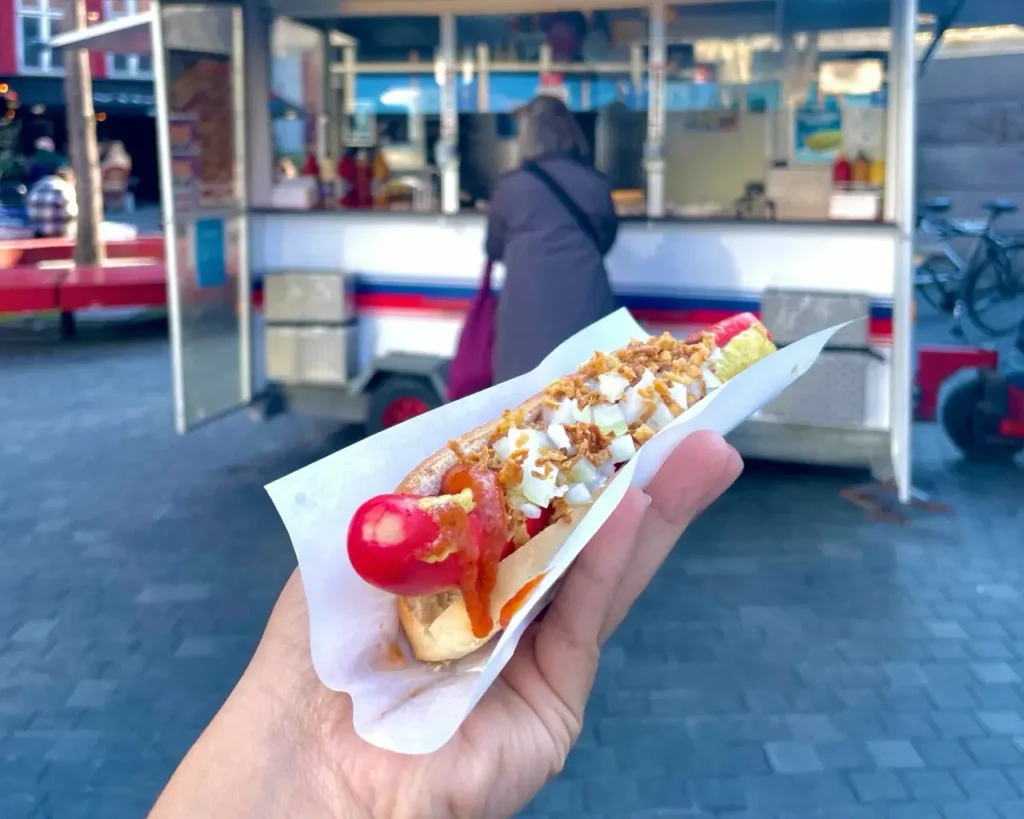
Harry’s Place, DOP, and John’s Hotdog Deli are places worth checking out.
Want to try more Danish food without overspending? Find my affordable local food picks in the guide.
2. Smørrebrød – Danish Open Sandwiches
Smørrebrød is a staple of Danish cuisine and a must-try food in Copenhagen.
Danes eat Smørrebrød for lunch every day. It is buttered rugbrød (Danish rye bread) topped with meat, fish, vegetables, or a mix of different ingredients. There are countless combinations.
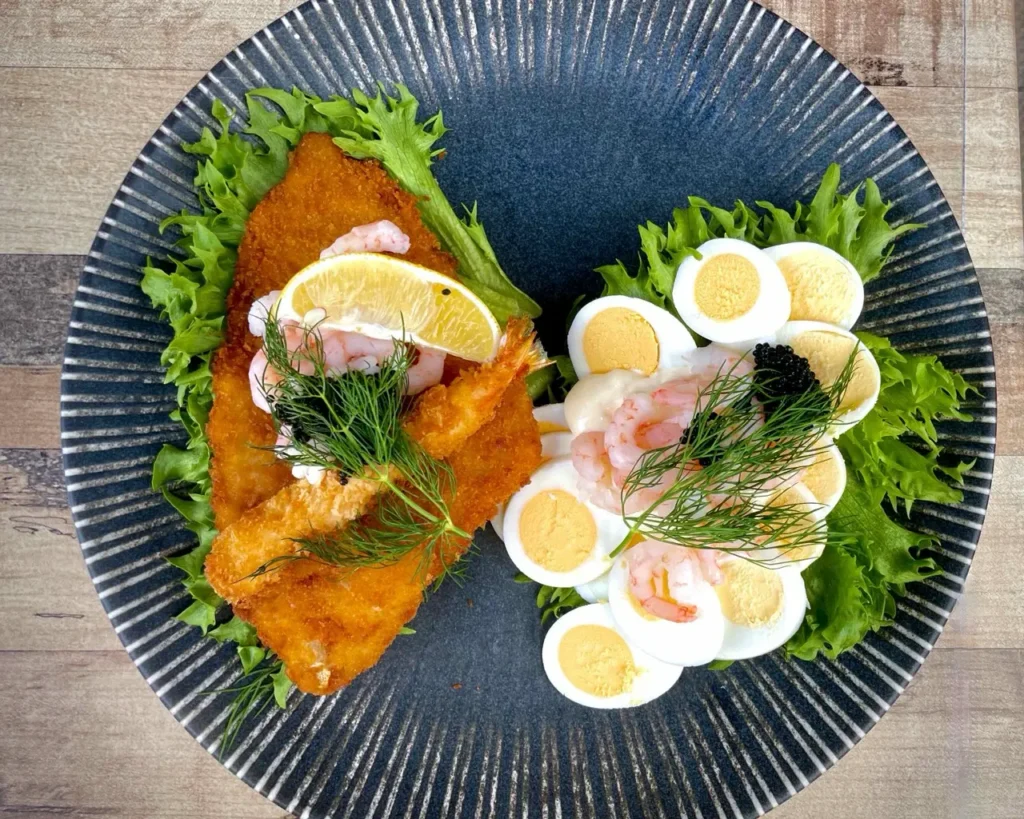
I love Stjerneskud (shooting star), also a type of open sandwich, topped with both steamed and fried herring (fish) and shrimp, among others.
Restaurant Schønnemann is a solid choice if you want to try traditional smørrebrød, but you’ll find it at most restaurants, cafés, and supermarkets throughout Copenhagen.
Rugbrød (Danish rye bread) is a main Danish food. Danes can’t live without rye bread. You’ll find it in every Danish home. One classic topping is leverpostej (liver pate), often served with fresh cucumber.
3. Frikkadeller – Danish Meatballs
Many Danes eat Frikadeller at least once a week. It is a simple, traditional Danish food. They’re made with a mix of pork and veal, and pan-fried. The exterior is crunchy and the inside is tender.

My favourite way to have frikadeller is with kartoffelsalat (potato salad) and red cabbage.
Book this culinary walking tour to enjoy authentic Danish food with a local guide
4. Bolle Med Ost – Danish Bun With Cheese
Bolle med ost (BMO) is a simple Danish breakfast that locals love.
A freshly baked rundstykke (morning bun) is split open, spread with butter, and topped with cheese. You’ll also find variations made with sourdough or rye bread.
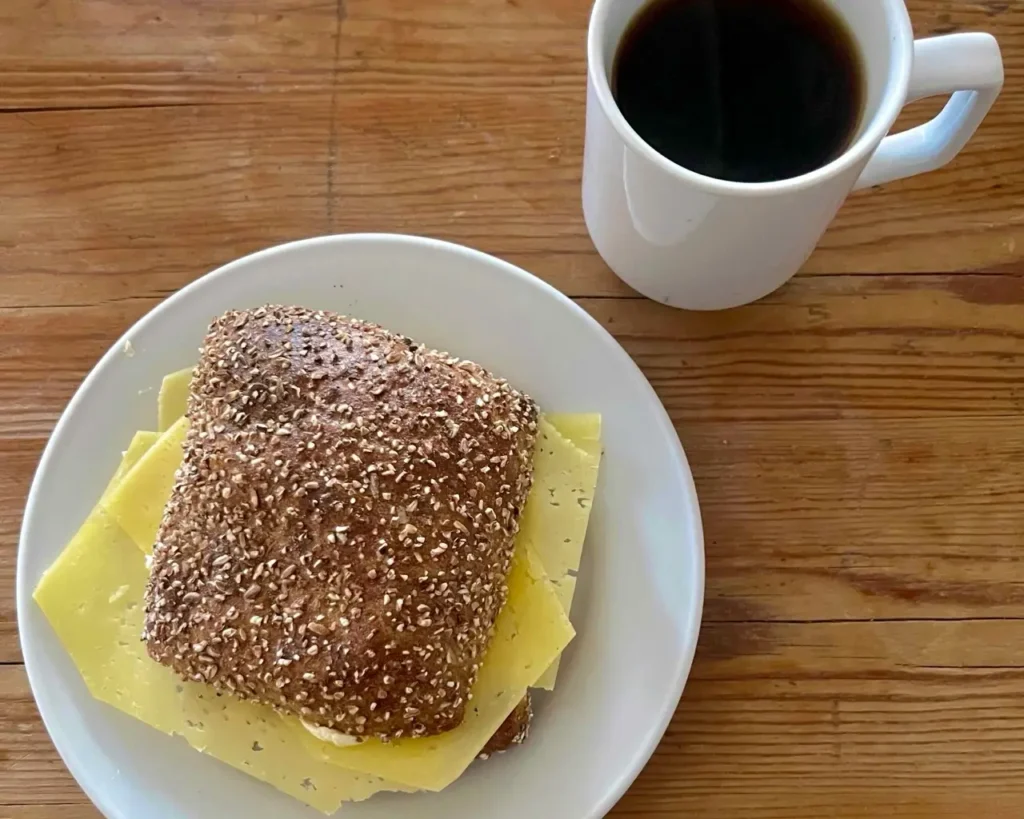
It’s an easy Danish food, and many Danes enjoy BMO with a cup of coffee. You’ll find it at bakeries, coffee shops, and many breakfast restaurants in Copenhagen.
5. Danish Pastries
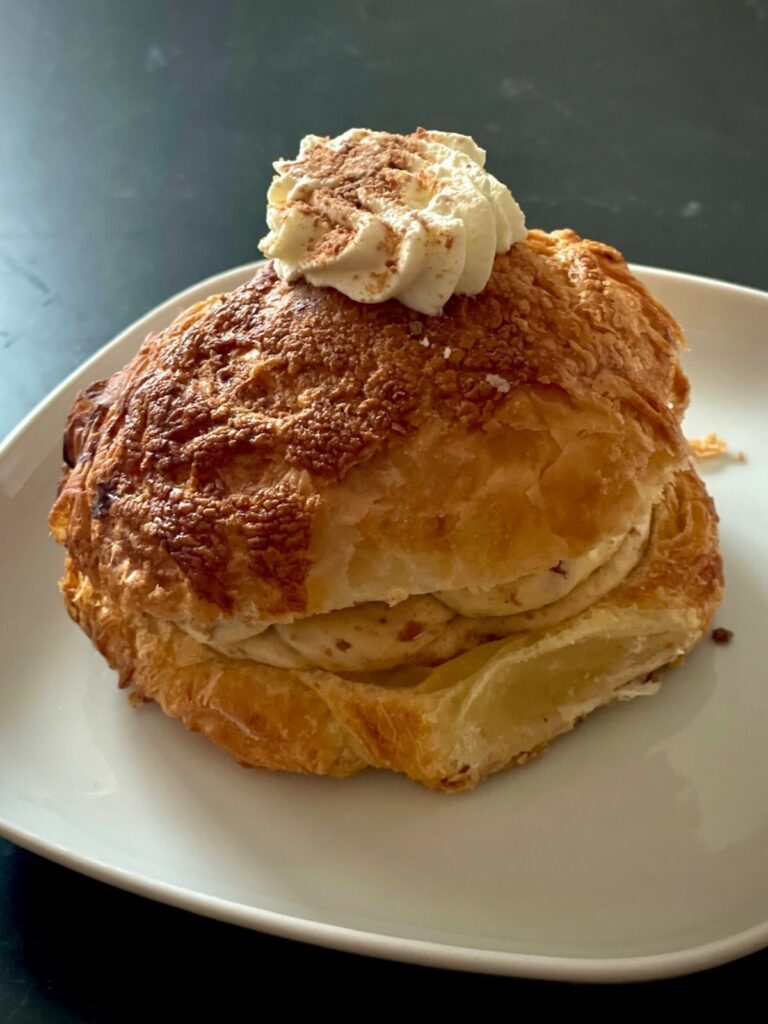
I love Danish pastries and could honestly eat them at any time of day! You can’t visit Copenhagen without trying one.
A Danish pastry is probably the first Danish food that comes to my mind when I hear Copenhagen or Denmark.
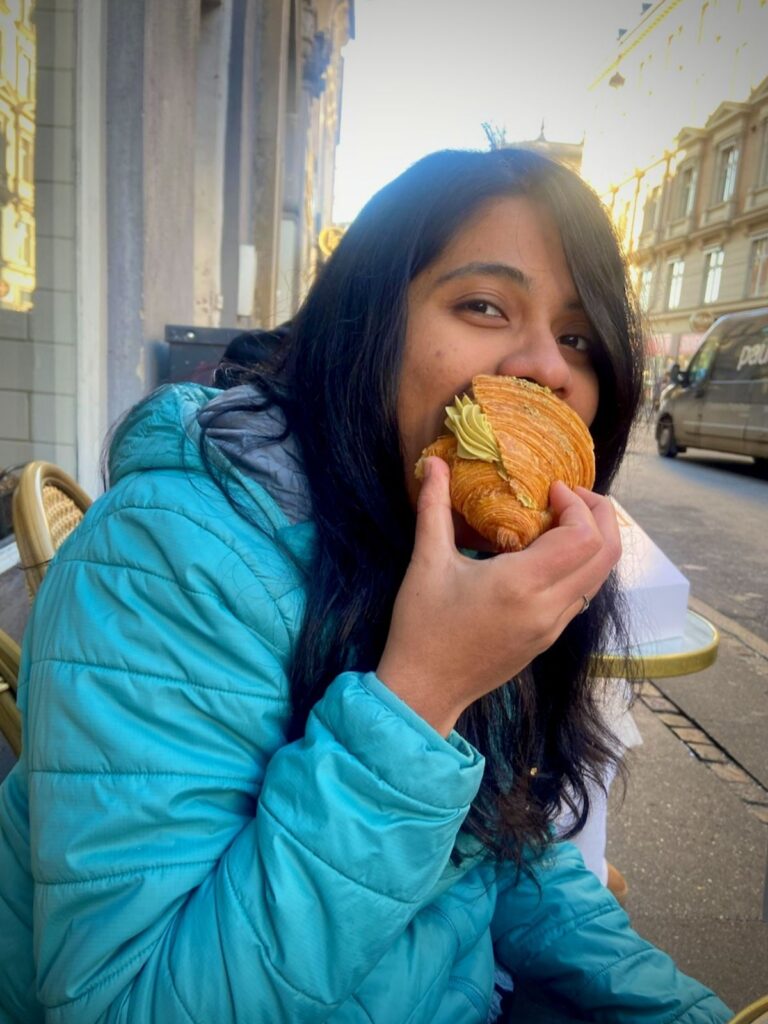
There are so many really good bakeries in Copenhagen. Try the cardamom buns at Juno, pistachio croissants at BUKA, or cinnamon rolls at Skt. Peders Bageri.
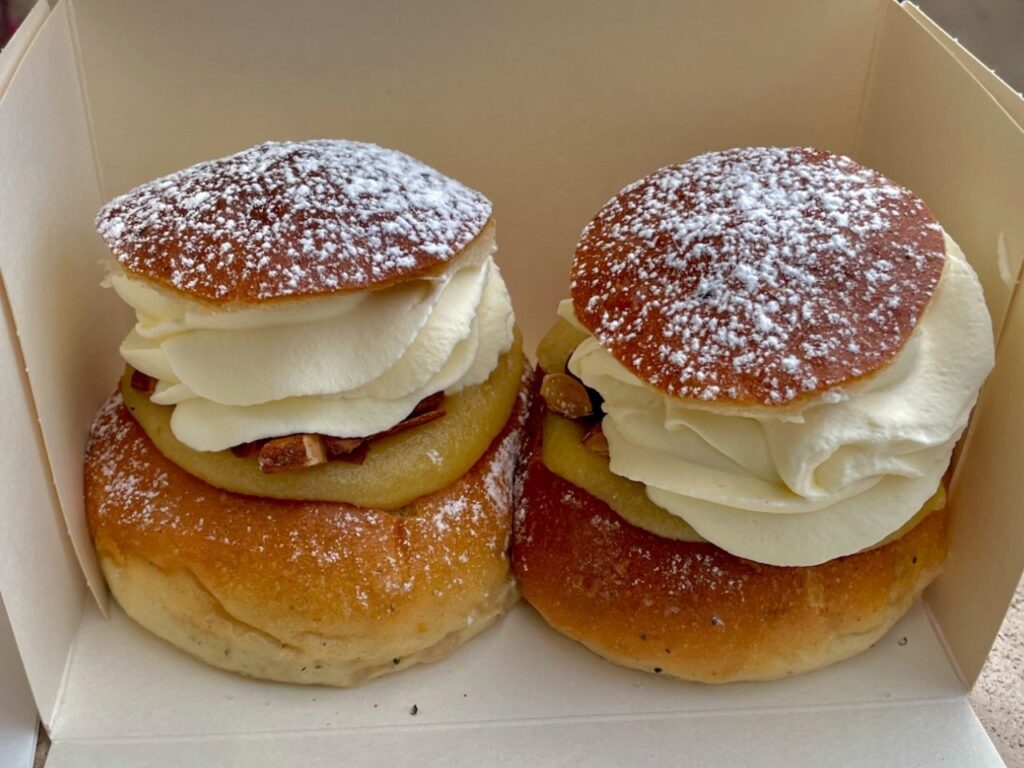
And if you ask me for my favourite, it is Fastelavnsboller, cream-filled pastries available only around February.
Join this most popular pastry tasting tour in Copenhagen before it sells out!

Want Cheap Eats in Copenhagen?
Discover 47+ restaurants under 100 DKK, 20+ all-you-can-eat buffet spots, community dinners, free food, supermarket deals, cheap drinks, happy hours, and more.
6. Stegt Flæsk – Fried Pork
Stegt flæsk med persillesovs (Fried pork with parsley sauce) is Denmark’s national dish and one of my go-to Danish meals to order at a sit-down restaurant when I’m craving traditional Danish food.
It consists of crispy fried pork belly served with boiled potatoes and creamy parsley sauce.
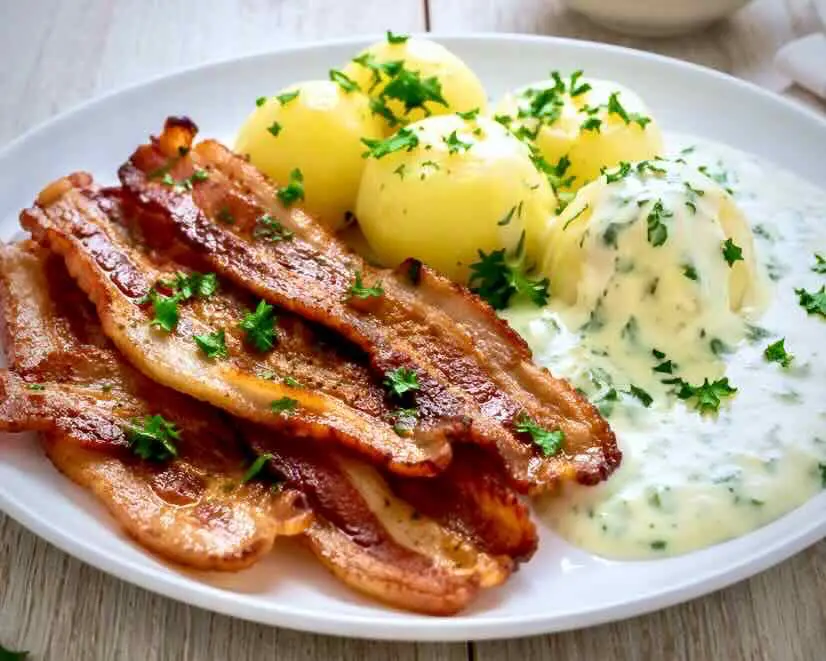
I like that the pork is not smoked and only lightly salted. Many Danish restaurants serve Stegt Flæsk, and I really enjoyed it at Restaurant Karla.
Have you tried Flæskesvær? It is Denmark’s take on pork rind crackling. Made from crispy pork skin, it’s a top Danish snack you should not miss!
7. Flæskestegssandwich – Danish Roast Pork Sandwich
Flæskestegssandwich is a very Danish sandwich. Flæskesteg is also a centerpiece for Danish Christmas dinner.
Inside the sandwich bun, you’ll usually find slices of roast pork with crispy crackling, red cabbage, pickled cucumbers, mayonnaise, and mustard dressing.
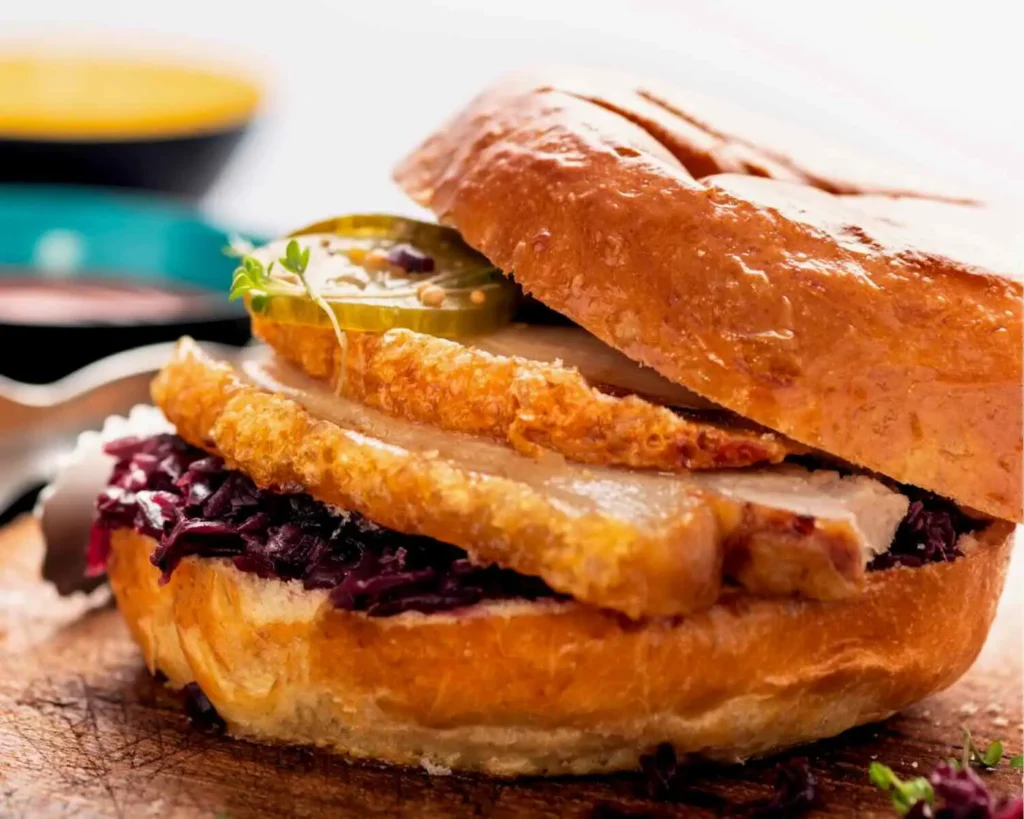
The mix of crispy, creamy, salty, and slightly sweet flavours makes the Flæskesteg sandwich so good. Don’t miss this typical Danish food on your Copenhagen trip.
I recommend trying it at Isted Grill, Harry’s Place, or Slagter Lund at Torvehallerne food market.
Pork and potatoes are the heart of Danish cuisine.
In fact, Denmark has more pigs than people!
8. Liquorice – Lakrids
Danes love liquorice (lakrids). Danish liquorice is often salty.
You’ll find liquorice everywhere in Denmark, from liquorice candies and ice cream to cakes, cocktails, and even liquorice oil.
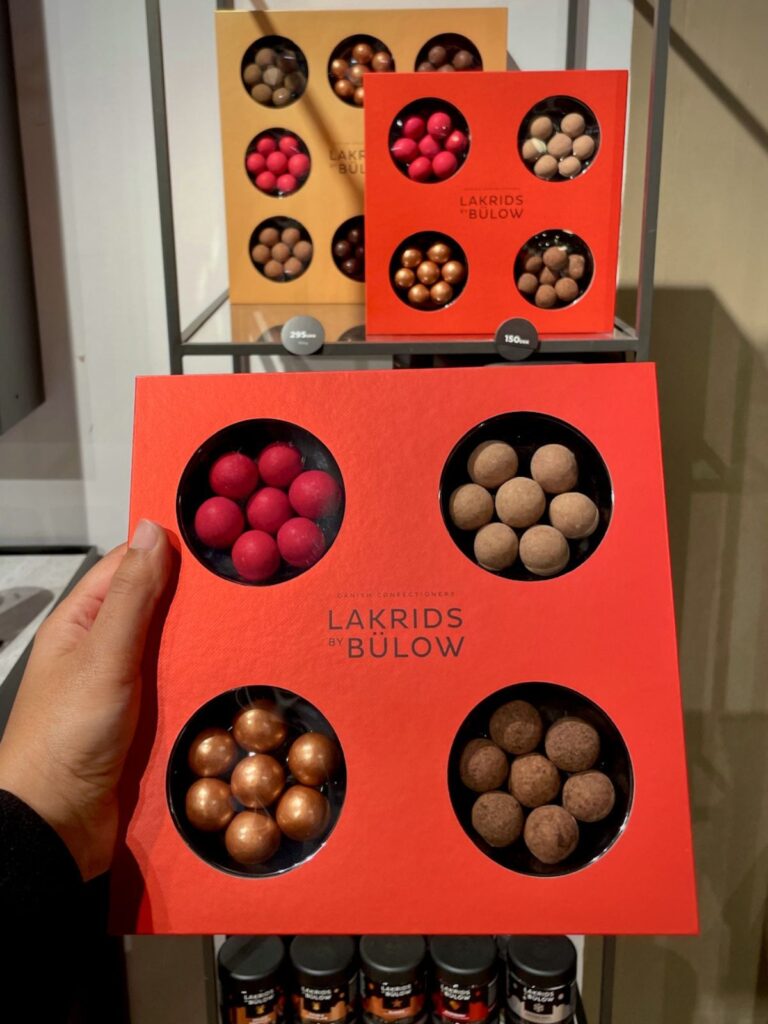
Piratos are very strong, salty liquorice and definitely not for beginners. If you’re new to liquorice, I recommend Skipper’s Pipes or a sweeter variety first.
Lakrids by Bülow is a Danish brand specialising in liquorice-based treats. For much sweeter ones, try chocolate-covered liquorice from Summerbird.
You can easily find lakrids in every supermarket across Copenhagen, as well as in stores like Magasin and Illum.
9. Flødeboller
Flødeboller are classic Danish chocolate-coated treats!
They are made with whipped egg whites, coated in chocolate, and set on a waffle, biscuit, or marzipan base.
Flødeboller are probably the most beloved Danish chocolate treat, and I eat them often myself.
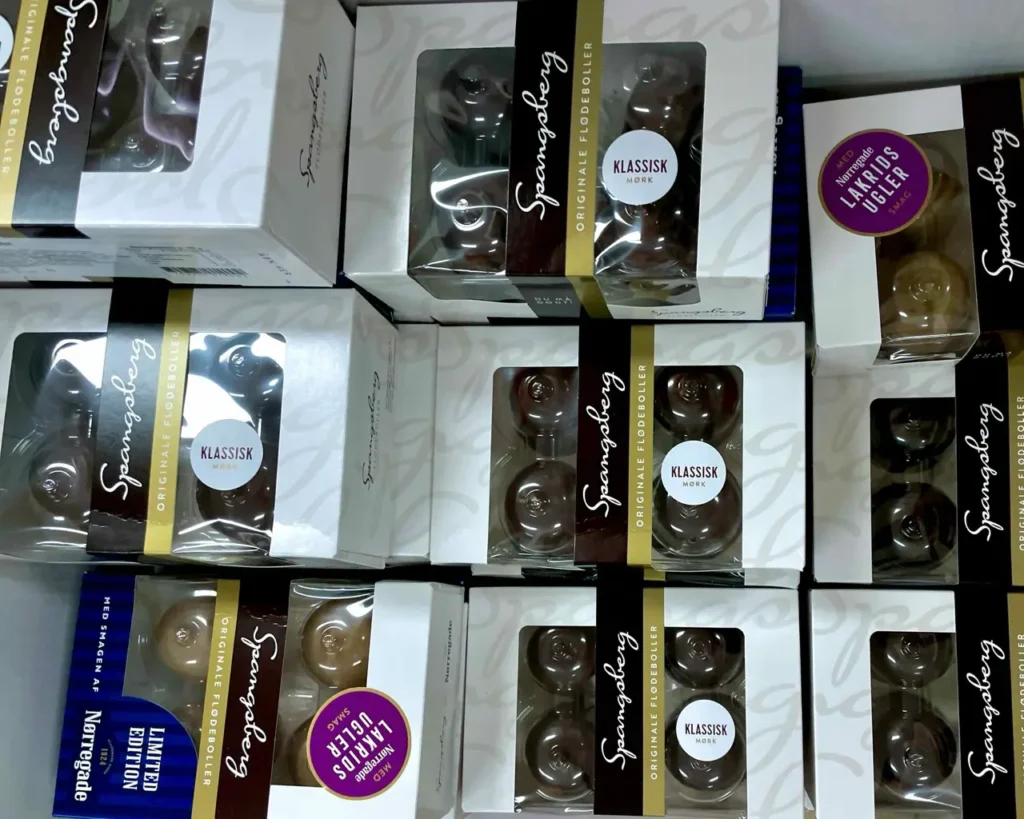
You’ll usually find them in the candy and sweets section rather than the bakery section. I love the ones from Spangsberg Flødeboller, which are also very popular in Denmark.
10. Gammeldags Isvafler
Gammeldags Isvafler are old-fashioned Danish ice cream cones. My favourite on a warm summer day.
A freshly baked waffle cone is filled with generous scoops of ice cream and your choice of toppings. For a real Danish experience, add whipped cream, jam, and a delicious flødebolle on top. And don’t forget the guf — a fluffy, marshmallow-like topping.
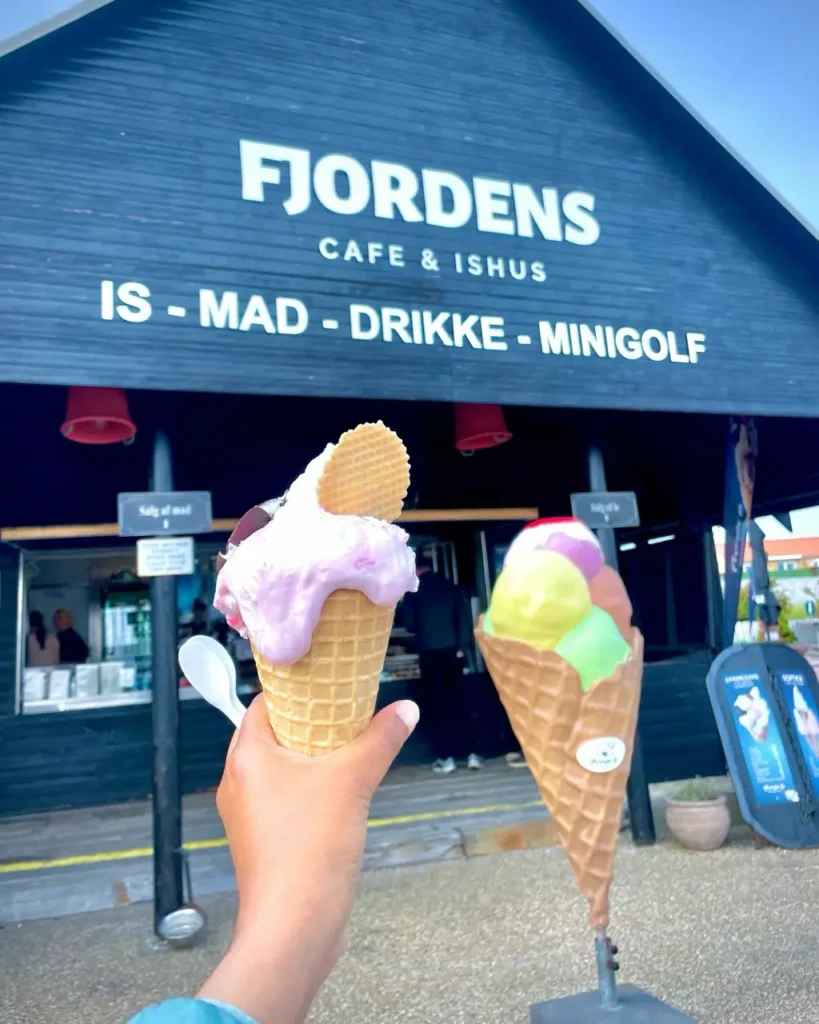
You’ll often find these ice cream cones at harbours and seaside ice cream shops, especially during summer. They aren’t something you’ll usually find in supermarkets.
You can find Gammeldags Isvafler at Vaffelbageren Nyhavn, Vaffelbageriet, Arkadens Isbod, and Bazar Isen in Tivoli Gardens, Dragør Is, or Lydolph’s Isbar in Hellerup.
11. Jordbærtarte and Rhubarb
Jordbærtærte is a must-try Danish summer favourite, especially in June and July. It has a marzipan base, vanilla custard layers topped with strawberries.
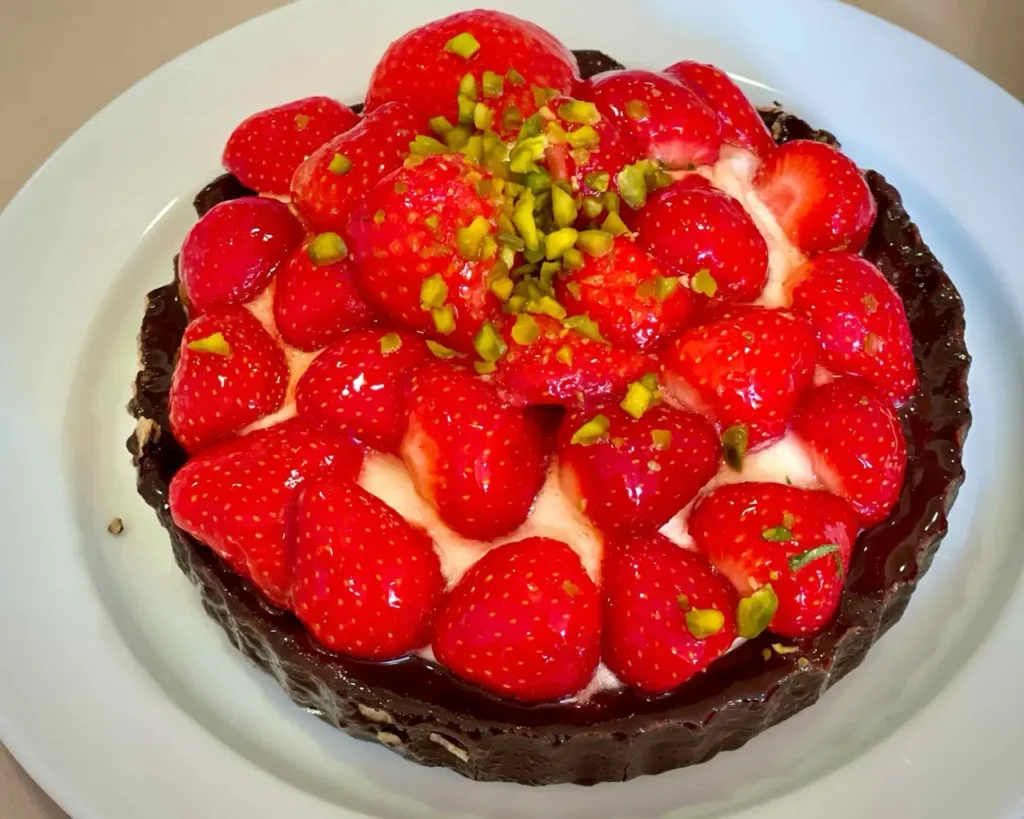
I recommend trying one from Lagkagehuset, although you’ll find this seasonal treat in many bakeries around the city.
Strawberries and other summer berries also appear in jams, cakes, pastries, ice cream, desserts, and koldskål. And if you love strawberries as much as I do, summer is the best time to enjoy them everywhere in Denmark.
Did you know? The strawberry is the national fruit of Denmark, and during the summer, you can pick your own strawberries from the farms.
Rhubarb is another Danish favourite. You will find rhubarb in desserts, pastries, pies, and in many other Danish foods. I also love rhubarb jam. Try rabarber saft or saftevand, a concentrated rhubarb juice mixed with water or sparkling water.
12. Danish Cakes
Danes love sweets, particularly cakes. And there is a cake for every special occasion! In my office, almost every celebration calls for cake — honestly, I see cake every other day.
- Drømmekage (Dream Cake) – A must-try, especially if you love coconut and caramel flavours.
- Brunsviger – A soft coffee cake topped with a sweet brown-sugar mixture and is often enjoyed for breakfast.
- Kagemand/Kageperson – A traditional birthday cake shaped like a person.
- Lagkage – A Danish layer cake, served for birthdays, anniversaries, and special events.
- Kransekage – A traditional marzipan cake for New Year celebrations.
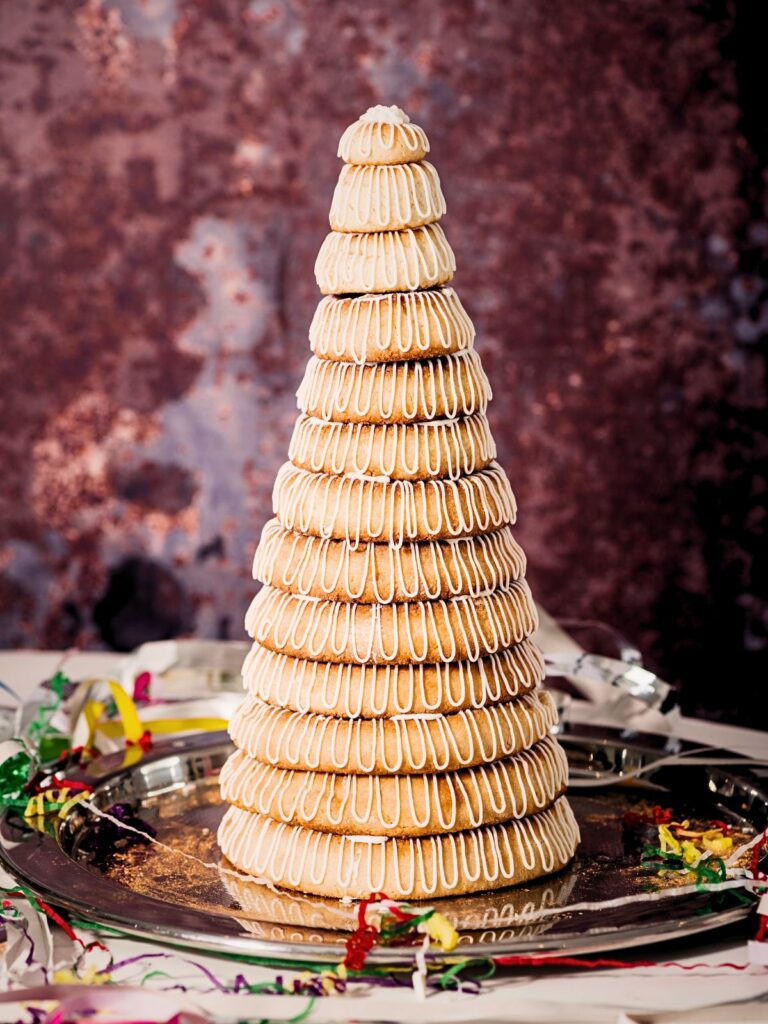
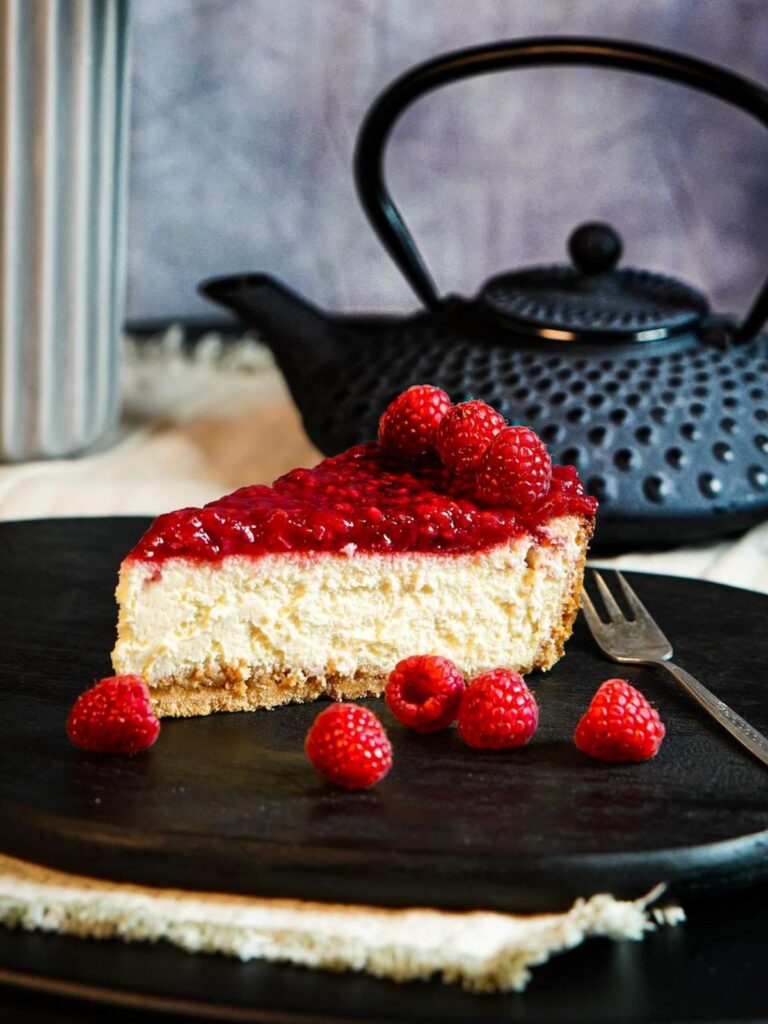
Many Danes bake their own cakes at home. For the best cakes, go to Conditori La Glace or Bartels Salon, which serve the best cheesecakes. You can also find cakes in supermarkets, but I’d go to a bakery.
🍴Danish food doesn’t have to be expensive.
Find more affordable places in my guide. 45+ restaurants under 100 DKK, 20+ all-you-can-eat spots, community dinners, free food, supermarket deals and more.
13. Tarteletter
Tarteletter is a classic Danish comfort food made with crisp puff-pastry tart shells filled with chicken, white asparagus, and a creamy white sauce.
They’re often served as a lunch starter, especially during asparagus season in May and June.
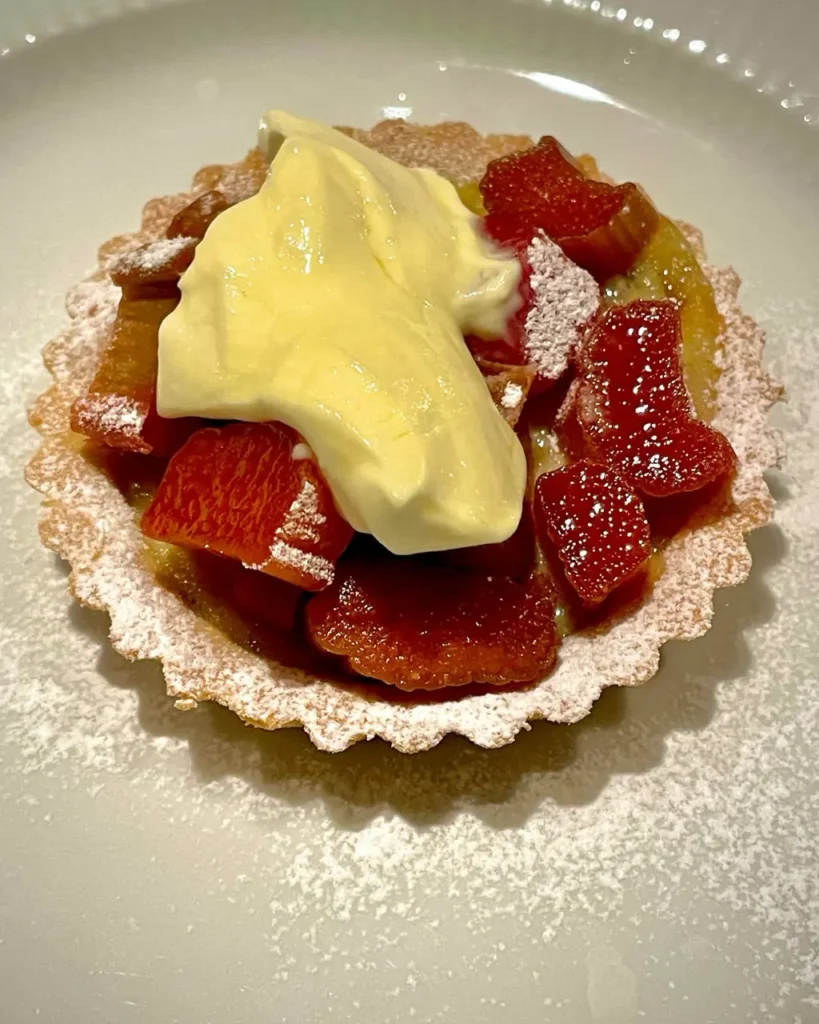
The empty tart shells are easy to find in most Danish supermarkets and grocery stores, usually sold in packs of 10–15 and at a very affordable price. The creamy chicken and asparagus filling is typically prepared at home.
I first tried tarteletter at lunch in my office. You can also try them at many Danish restaurants such as Christianshavns Færgecafé, Det’ Dan’sk, Det Lille Apotek, Københavner Cafeen, Frk. Barners Kælder, and Schønnemann.
Skip the research and book this top-rated culinary walking tour
(with food included!)
14. Æbleskiver – Danish Christmas Pancake Balls
Æbleskiver is a traditional Danish Christmas treat that you’ll see in December everywhere at Copenhagen Christmas markets and Tivoli Gardens.
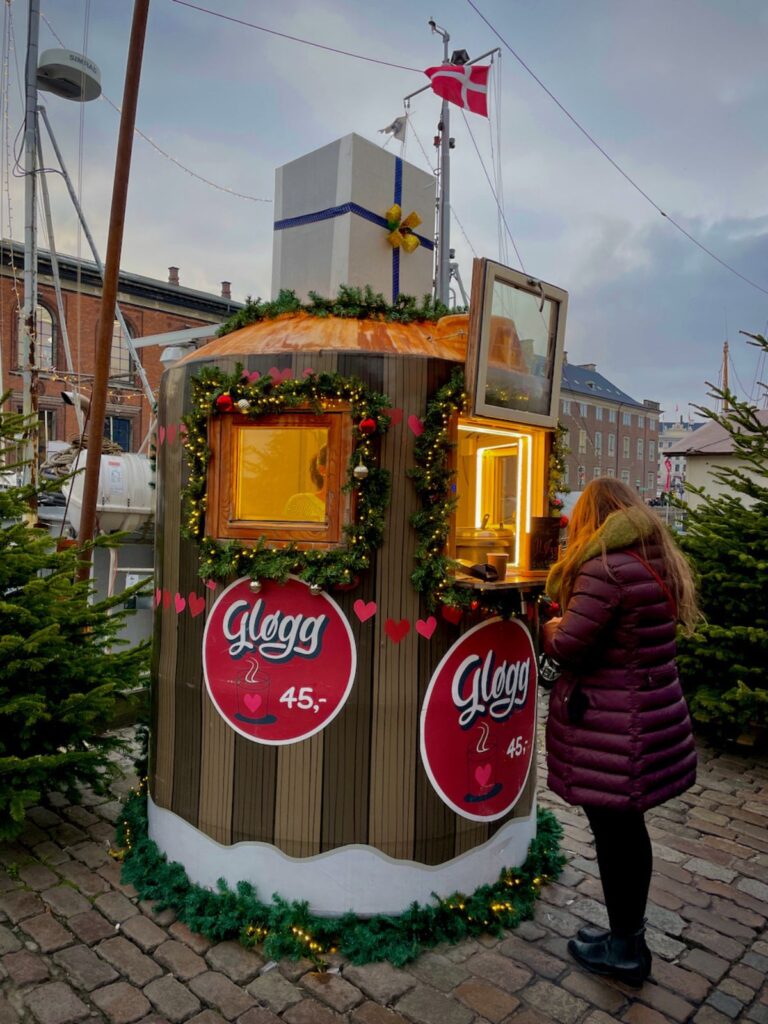
These round pancake balls are crispy on the outside and soft and airy inside, usually served warm with powdered sugar and jam. My favourite way to enjoy them is with a cup of gløgg (Danish mulled wine).
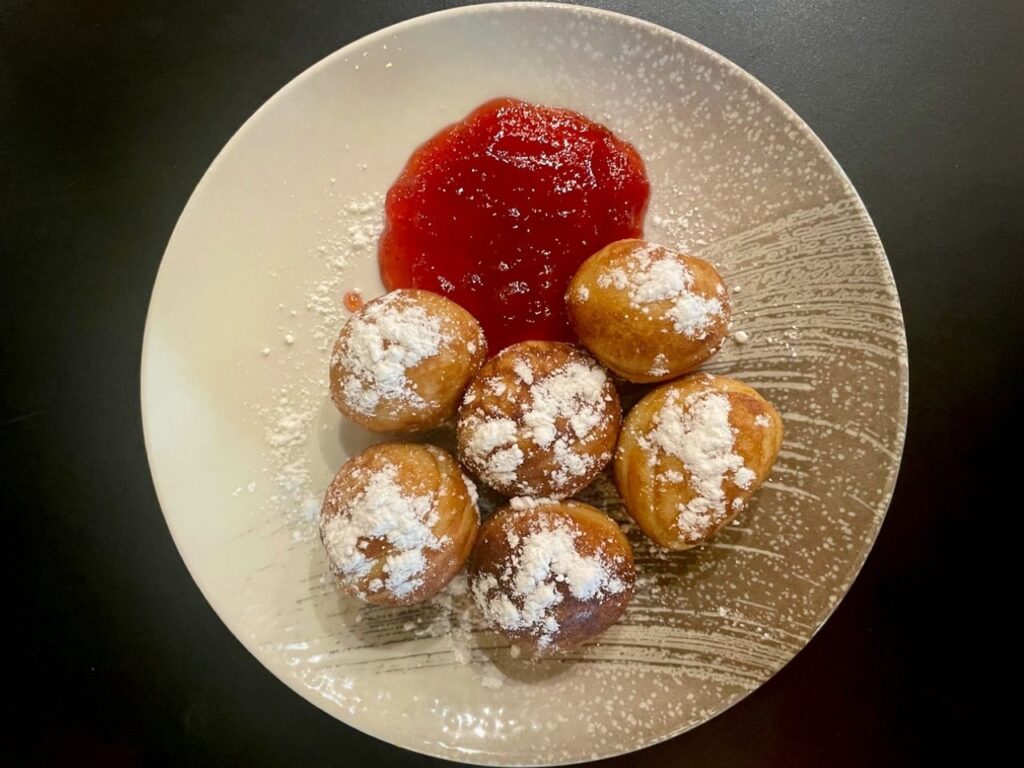
In Copenhagen, very few restaurants sell æbleskiver year-round. A street cart opposite Round Tower sells them on Fridays, Saturdays and Sundays. Otherwise, they are sold in the frozen section in supermarkets. Add some powdered sugar and jam and enjoy it.
Outside Copenhagen, try Kaffestuen at Bakken or Malerklemmen at Borup.
15. Grød – Danish Porridge
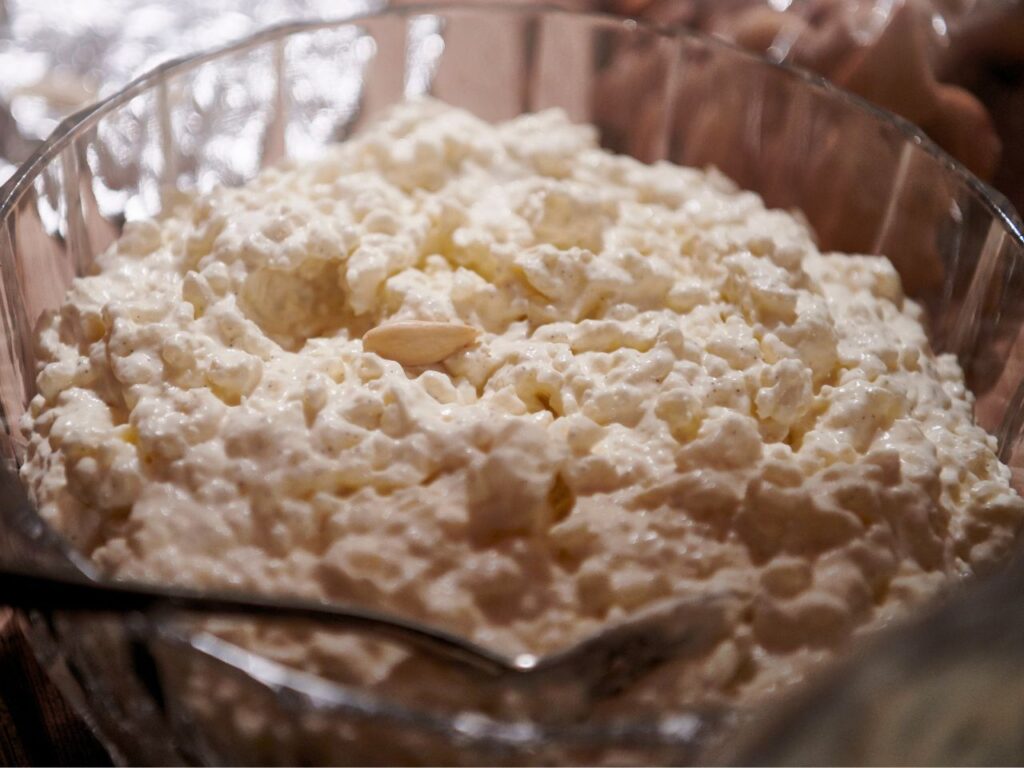
Danes love porridge. Grød is a simple Danish comfort food and can be enjoyed for breakfast or lunch.
In Denmark, you can try different versions topped with berries, nuts, seeds, butter, cinnamon, or seasonal fruits. If you want to try a Danish porridge, GRØD is the place I’d recommend.
- Rødgrød Med Fløde – Popular summer porridge served as dessert. Traditional red porridge made with strawberries, raspberries, or any berries and cold cream.
- Øllebrød – Translates to beer bread. Authentic Danish porridge made from sourdough rye bread, sugar, and Danish beer hvidtøl. Restaurant Grød serves them during winter.
- Risengrød – Danish rice porridge, eaten the day before Christmas Eve. Also a base for Christmas dessert Risalamande, served with red cherry sauce.
- Havregrød – Oat meal porridge. Served every day at Grød. Have tried it for breakfast at Grød, and it is good.
Danish Drinks
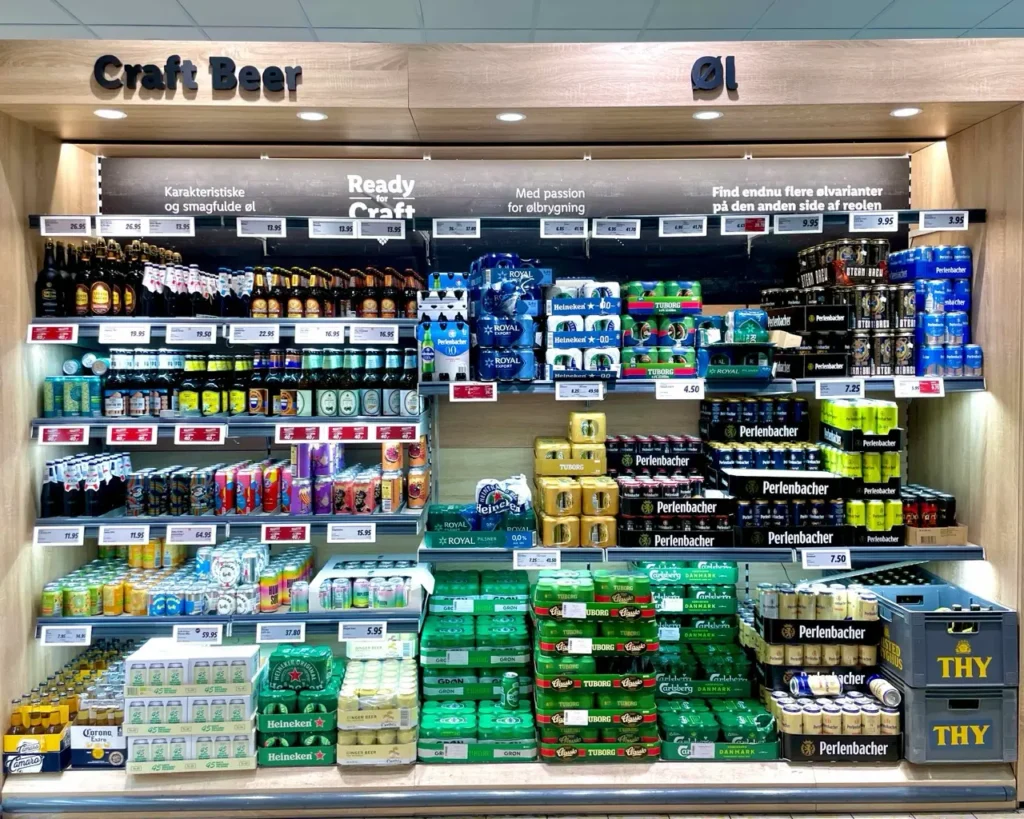
Here are the must-try Danish drinks on your trip to Denmark.
- Faxe Kondi – Soda drink, Danish version of Sprite.
- A cold Cocio – Best chocolate milk. I love the dark one, but the yellow-marked one is the original. Danes usually pair it with hot dogs.
- Hyldeblomst saft – Elderflower drink popular during summer. Concentrated syrup is available throughout the year.
- Koldskål – A summer dessert/snack served cold with crispy biscuits called kammerjunkere.
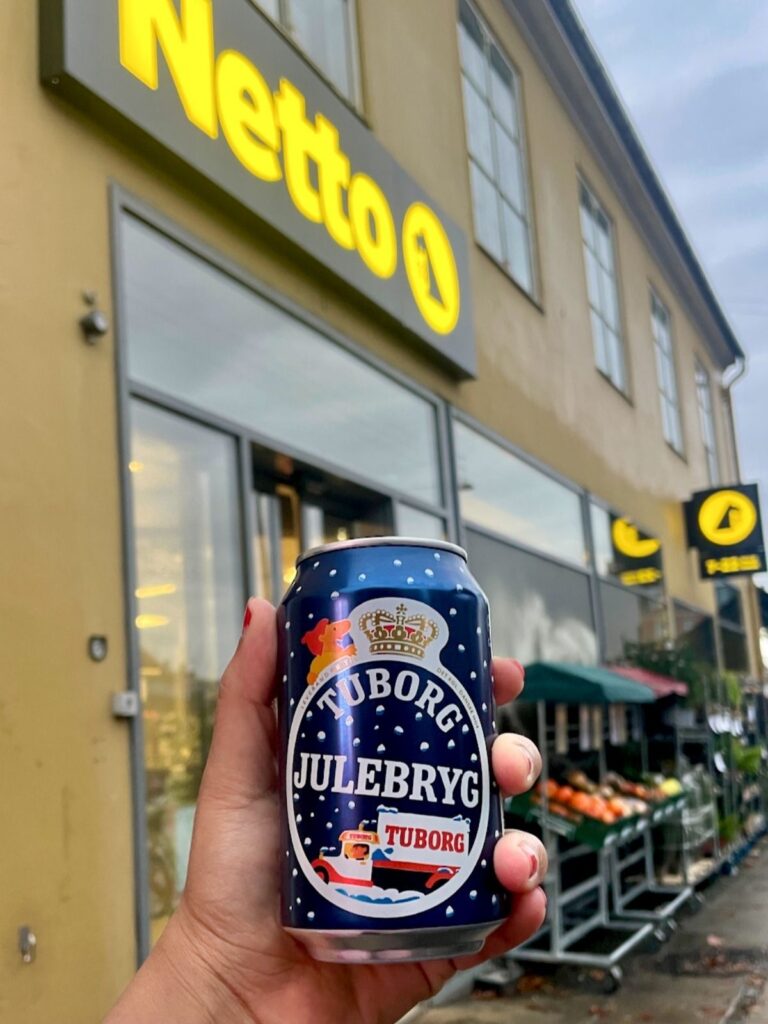
- Draft beers – Besides drinking the famous Carlsberg and Tuborg, visit Taphouse, Mikkeller, Brus, Fermentoren, Peders, Godt Øl, Åben, WarPigs, or BrewPub for draft beers.
- Akvavit or Snaps – An alcoholic drink distilled with various herbs and spices; it is a staple in Danish culture. Aalborg’s Akvavit is a world-famous beverage. Snaps pair particularly well with pickled herring.
- Gammel Dansk – A herbal liqueur and classic Danish drink made from 29 different herbs, spices, and flowers. It has a balanced bitter taste.
- Gløgg – A Christmas favourite among Danes. This spiced mulled wine is infused with cinnamon, cloves, and orange peel. Drink with æbleskiver.
Go for this top-rated guided pub crawl in Copenhagen for maximum fun
(drinks included)
Final Thoughts: Must-Try Danish Food in Copenhagen
Danish food is much more than pastries. If you are visiting Copenhagen for the first time, make sure to try these authentic Danish foods and drinks.
Food is one of the best ways to experience a new country. And it is true!
I hope this guide has answered your question about what to eat in Copenhagen. So eat like a local, and savour every bite.
And if you find a Danish dish you absolutely love, let me know. I’m always looking for new local favourites to try and add to this guide, so everyone can enjoy it!
Denmark Travel Checklist
Related Posts
- Is tap water safe to drink in Denmark?
- Where can you see snow in Denmark?
- What to pack for a trip to Denmark
- How to dress in Denmark like a local
- Denmark facts you should know
- Danish phrases for your Denmark trip
- Prepaid SIM options for travelers in Denmark
- Set up a Denmark eSIM before you travel
- Ways to reach Copenhagen from the airport
- Ways to cut your Copenhagen travel costs
- Getting a local SIM at CPH Airport
- What to buy as a souvenir from Denmark
- What to see and do in Copenhagen
- How to store your luggage in Copenhagen