14 Must-Try Danish Pastries for First-Timers


Dreaming of Danish pastries? Famous for their exciting world of flavors, Danish pastries are a treat you just can’t miss.
Danish pastries have existed in Denmark since the 18th century. Over the years, Danish chefs mastered the art of Pastry-making and refined it into an art form.
The traditional Danish pastry is highly recognized in Europe. Ever since I moved to Denmark, I have loved the simple and well-baked pastries, each crafted with care and tradition that’s hard to beat.
Are you ready to taste the delicious pastries that distinguish Danish baking?
Let’s make your trip to Denmark even sweeter!
1. Brunsviger
Brunsviger is a classic Danish pastry and my personal favorite! It’s a yeast-based cake topped with caramelized brown sugar and butter, creating a heavenly sweet topping.
Brunsviger originates from the island of Funen or Fyn, the birthplace of Hans Christian Andersen.
Often cut in squares, the golden brown Danish pastry is best enjoyed warm and traditionally paired with a cup of coffee. Its melt-in-your-mouth texture is irresistible and is perfect for your sweet cravings.
Discover Copenhagen’s pastry paradise on a 2-hour guided tour
Did you know? “Wienerbrød” is the Danish name for party. It translates to “Viennese bread” as it was introduced to Denmark by Austrian bakers in the 1850s.
2. Spandauer
Simply loved by the Danes, Spandauer is the most common pastry in Denmark. Named after the borough of Spandau in Berlin, it is a supposed reference to the Spandau Prison (a square with 4 turrets). While this Danish pastry looks round after it’s baked, it’s very much a square before baking, with 4 corners where the filling pokes out.
The most classic of all Danish pastries, Spandauer is a flaky, buttery pastry filled with marzipan and cream or custard and topped with chopped hazelnuts or other seasonal toppings. This utterly delicious pastry is typically eaten for breakfast but is equally good with afternoon coffee.
Spandauer is the first Danish pastry I tasted when I moved to Denmark.
Want Cheap Eats in Copenhagen?
Discover 47+ restaurants under 100 DKK, 20+ all-you-can-eat buffet spots, community dinners, free food, supermarket deals, cheap drinks, happy hours, and more.
3. Tebirkes
A delicious Danish treat, Tebirkes is a square pastry topped with poppy seeds, typically filled with butter and marzipan spread. It holds a very special place in the hearts of everyone who tastes it.
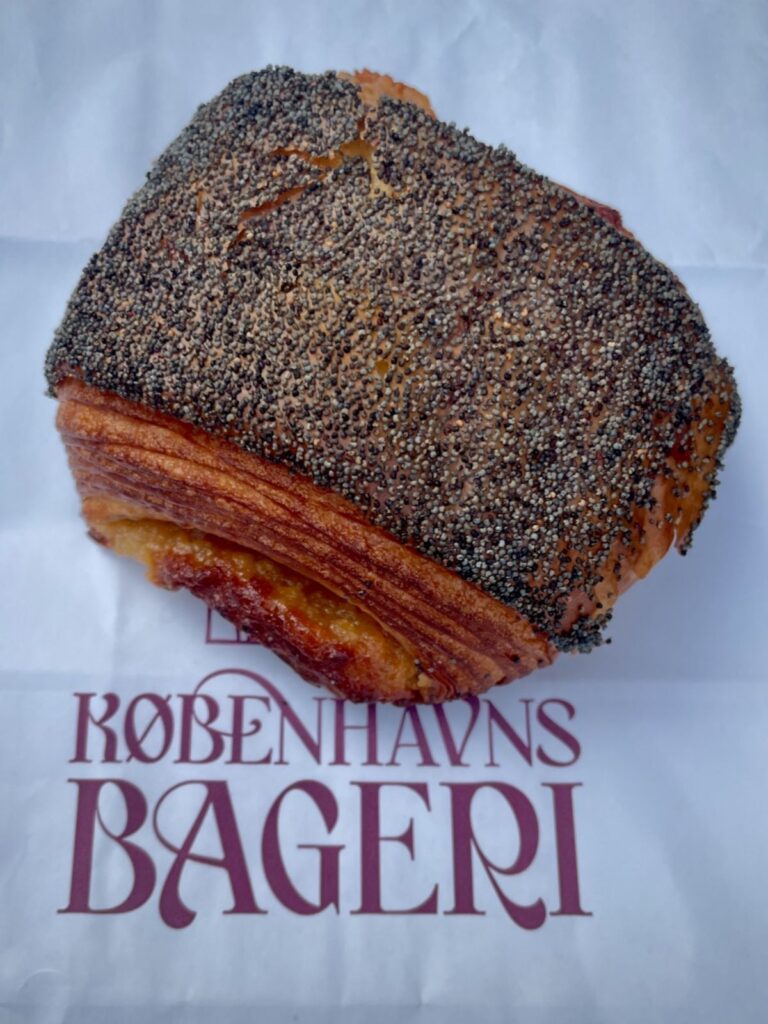
An original Danish pastry with a unique blend of flavors, Tebirkes is more of a culinary tradition than a treat.
Authentic Tebirkes lie in the skillful mixing of butter into the dough, each turning out perfectly crispy, airy, and creamy in the center.
Tebirkes are often enjoyed as a breakfast ‘dessert’ or as a snack with afternoon coffee.
Copenhagen tastes better with Danish pastries—try them on this tour
4. Kanelsnegle
Amongst the large variety of sweet buns and pastries available in Denmark, the one that really stands out as a Danish classic is the Kanelsnegle. Literally translating to “cinnamon snails,” these are made with pastry dough topped with a mix of cinnamon, sugar, and butter, and then rolled into a snail shape.
By the large amount of butter that goes into them, Kanelsnegle set themselves apart from other cinnamon rolls. The butter, along with traces of cardamom, is what makes the Kanelsnegle something to rave about.
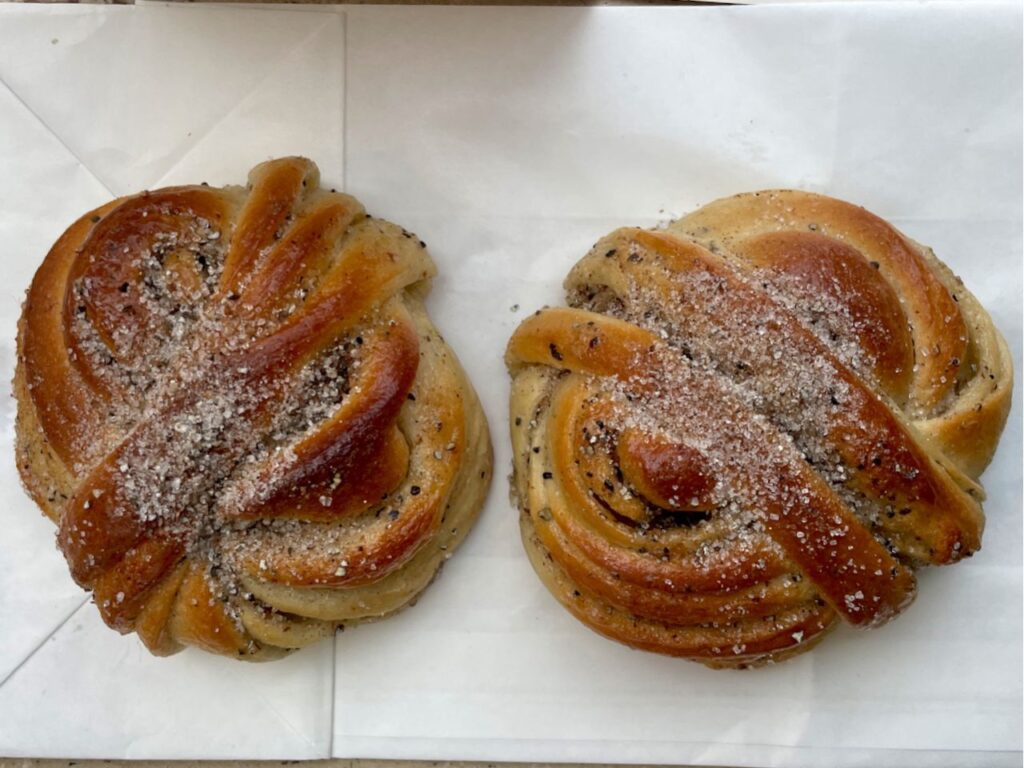
Enjoying a Kanelsnegle with friends over a cup of coffee is a heavenly experience.
Although Kanelsnegle has its roots in Denmark’s history and traditions, it has made a mark across the world. So as you enjoy a Kanelsnegle, remember it’s not just a pastry; it’s a piece of Denmark’s rich culinary tradition.
5. Fastelavnsboller
Although Fastelavn means “carnival,” it’s a Danish holiday that resembles Halloween and is celebrated in many European countries as Shrove Sunday. But the most satisfying activity for everyone is eating lots and lots of Fastelavnsboller, or “carnival buns” in the days leading up to Fastelavn.
The cardamom buns are sliced in half and topped with almond paste and whipped cream, every variant is a treat. These cream-filled cardamom buns are sweet and downright heavenly. Even the traditional buns, which are made with raisins and orange peel, taste absolutely delicious.
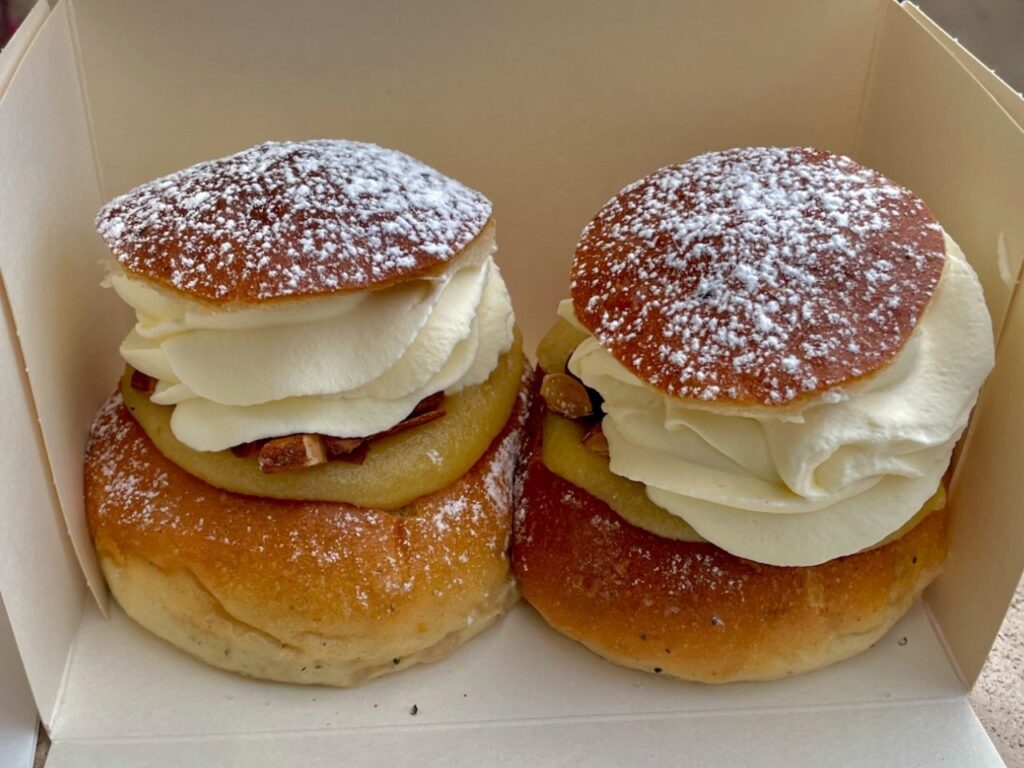
Fastelavnsboller is essentially made of cardamom-flavored yeasted dough. It is usually filled with vanilla pastry cream, and topped with chocolate icing and sprinkles.
Every Easter, I get so excited for Fastelavnsboller! Honestly, just thinking about it makes my mouth water.
6. Træstammer
Besides being ingenious and innovative, Danish bakers also practice sustainability in the kitchen, especially when it comes to the usage of bakery scraps and leftovers.
Danish bakeries developed the Træstammer from a blend of crushed leftover cake, almond paste, and a little rum essence.
The dough is shaped into cylindrical logs and gives Træstammer its characteristic tree trunk-like appearance. After shaping, the little “logs” are coated in a layer of chocolate. For further artistic enhancement, the ends of the logs are dipped in a different coloured chocolate, with or without sprinkles.
The final confectionery is a delightful blend of flavors and textures with soft and flavourful insides and a crisp chocolate outer coating.
Served as is or sliced into smaller sections, Træstammer is a delectable treat for any occasion.
Put the Danish pastry tasting tour on your Copenhagen food list
Rumkuglers or Rum Balls are similar pastries made of leftover pastries and cakes mixed with rum essence. The mixture is then rolled into balls coated in chocolate sprinkles or cocoa powder.
7. Kransekage
A Kransekage or wreath cake is popular in Denmark, and its primary ingredient is marzipan. It is mostly eaten on special occasions like Christmas, weddings, baptisms, and New Year celebrations.
The Kransekage is much more than a confection; it is a symbol of celebration, a bearer of tradition, and a testament to Denmark’s rich cuisine.
Its uniqueness lies in its construction – a series of concentric rings of cake, each slightly smaller than the one below, layered on top of each other to form a steep cone shape.
While there is no specified number of layers, it may even be 18 or more! The layers are stuck together with white icing.
A Copenhagen tour for anyone who thinks one Danish pastry is never enough
Normally, this cake is served by separating the individual rings and breaking them into smaller pieces. In recent years, the mass-produced Kransekage has been sold throughout the year in the shape of dessert bars.
8. Æbleskiver
Æbleskiver are small spherical treats of Denmark, eaten traditionally during the Christmas season. For the Danes, no Christmas passes by without tasting the Æbleskiver. It is a must-have during the holiday season.
Æbleskiver has a pancake-like texture but with a light and fluffy interior. They are not sweet but are traditionally consumed by dipping them in jam and powdered sugar.
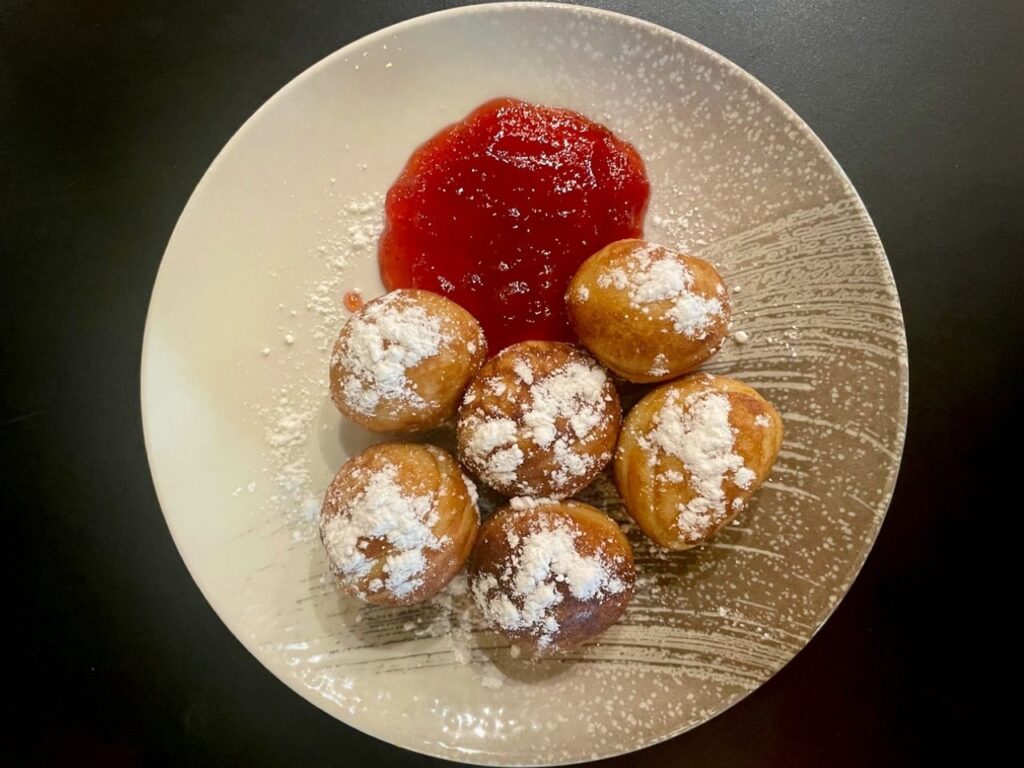
These treats have been a part of Danish culture since the 17th century, evolving over the years from being filled with actual apple slices to the more varied fillings and flavors available today. Although the name literally means “apple slices” in Danish, apples are not used as an ingredient.
In Denmark, Æbleskiver are less common in restaurants but are freshly baked and sold in the Christmas markets throughout November and December. They can often be bought frozen from supermarkets, ready to be heated in the oven at home.
Enjoy two hours of flaky, buttery Danish pastries around Copenhagen
9. Mazarintærte
Peep into any Danish bakery and you’ll find the Mazarintærte.
This is a classic Danish tart made with marzipan (almond paste). Danes love marzipan, so it is no surprise that Danish bakers created a tart with marzipan.
Marzipan pairs amazingly with chocolate. Some equally delightful variants can be made with orange juice/mashed oranges, amaretto, a nougat glaze, or even a bit of rum, instead of the chocolate ganache, but whatever the variant, they are all very delicious.
The dessert looks as yummy as it tastes and is topped with heavy cream and usually berries. Enjoy!
Taste pastries from five top-rated bakeries in this guided tour
10. Kringle
Kringle is a type of pretzel first introduced in Denmark in the 13th century by Roman Catholic monks. These later evolved into several kinds of sweet, salty, or filled pastries called kringle, meaning a ring or circle.
With crunchy, flaky layers, the Danish Kringle uses fillings such as raspberry, marzipan, or remonce (a creamy mixture of butter and sugar).
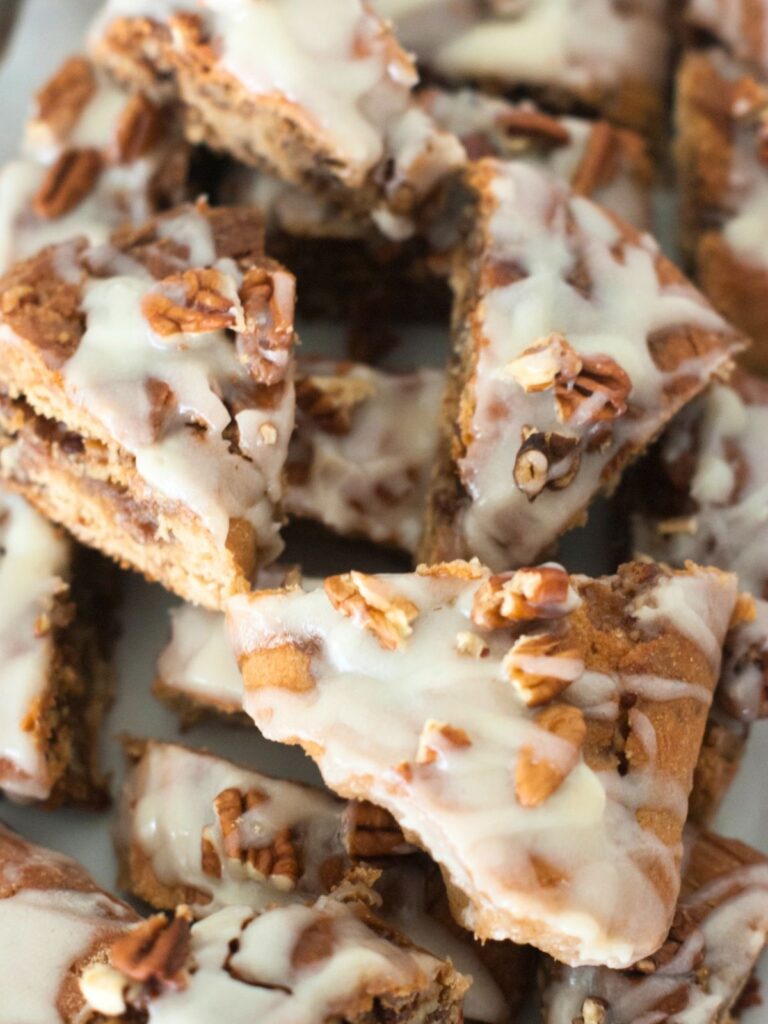
Whether it’s served at a holiday party or enjoyed with a warm drink on a cold morning, the Danish Kringle is seen as a symbol of hospitality and celebration.
I especially love the almond Kringle, filled with sweet almond paste, and the pecan Kringle, which has rich pecans and syrupy glaze.
11. Drømmekage
Drømmekage, meaning the “Danish Dream Cake” was first introduced to Denmark in the 1960’s by Jytte Andersen when she entered her grandmother’s recipe in a baking competition. The judges were so spellbound by the delicious cake which won the first prize and the recipe was published in the official cookbook.
Discover the world of Danish baking with this pastry crawl
True to its name, this Danish Dream Cake, with its soft vanilla butter base and caramelized coconut toppings, this cake is absolutely to die for. You should definitely try this Danish cake while visiting Denmark.
Although this cake tastes incredible when still warm from the oven, it tastes equivalently good when served cold. Either way, it tastes just heavenly and is a must-try in Denmark!
🍴Danish food doesn’t have to be expensive.
Find more affordable places in my guide. 45+ restaurants under 100 DKK, 20+ all-you-can-eat spots, community dinners, free food, supermarket deals and more.
12. Hindbærsnitter
Hindbærsnitter or raspberry slices is a mouth-watering Danish pastry that has a place of pride in all bakeries of Denmark. With a topping of smooth white icing and rainbow sprinkles, Hindbærsnitter consists of two layers of shortcrust pastry filled with raspberry jam.
The Hindbærsnitte created in the Danish town of Skagen sometime in the 1700s was originally a more elaborate treat with multiple layers of shortcrust pastry and raspberry jam. But the current version with just two layers, commonly known as the “raspberry bar,” can best be described as a sort of gourmet pop-tart. They are, of course, much tastier and less sweet!
The modern Hindbærsnitter, while staying true to its origins, has also seen variations. While bakers experiment with the thickness of the pastry layers, the type of raspberry jam, and the consistency of the icing, its delicate balance of sweet and tart flavors remains unchanged.
13. Frøsnapper
Frøsnapper is a sweet, yeast-leavened pastry, known for its unique twisted shape and the generous sprinkling of poppy seeds on top. The dough is a basic mixture of flour, sugar, yeast, and butter, giving it a soft, mildly sweet flavor. The seeds add a delightful crunch and a nutty flavor, balancing the dough’s sweetness.
The dough is rolled out, cut into strips, and then twisted into its signature spiral shape. While giving the pastry its unique look with layers. After shaping, Frøsnappers are baked until golden brown, resulting in a pastry that’s crisp on the outside and soft on the inside.
Its unique twisted form is not just for aesthetics – it has practical roots in making the pastry easier to handle and bake evenly.
More than just another bakery product, Frøsnapper is essentially a slice of Danish tradition, enjoyed by Danes with their morning coffee or as an afternoon snack.
14. Studenterbrød
A pastry that can be found in any Danish bakery, the studenterbrød is a unique, sweet, and chocolatey pastry worth drooling over! It is called studenterbrød, or “student bread,” because it is usually very cheap and therefore a go-to option for students.
It is affordable because the filling is made with leftover Danish pastries and cakes, so it is a way for bakeries to minimize waste and make a little bit of extra money from items that might otherwise be discarded.
Enjoy a Danish pastry crawl through Copenhagen with tasting included
For a casual get-together or a quick snack, studenterbrød fits the bill. It’s a combination of the dough base, chocolate and other fillings, and sugary icing on top that can be enjoyed at any time of the day and for any occasion.
Final Thoughts: Must-try Danish Pastries in Denmark
The pastries made in Denmark have different names, flavors, and shapes. Some are topped with chocolate, sugar, glace icing, and/or nuts and are stuffed with a variety of ingredients like jam or preserves like apple or prune. They come in countless shapes, including circles, figure-eights, spirals, and pretzel-like.
Each Danish pastry is carefully hand-crafted to achieve the perfect lamination, texture, and authentic taste expected of the Danes.
My favorite Danish pastries are Kanelsnegle and Drømmekage without a doubt. You should definitely try these when visiting Denmark for the first time.
Denmark Travel Checklist
Related Posts
- Check if you can drink tap water in Denmark
- Explore Copenhagen food markets
- Learn what to expect at a Danish julefrokost
- Try Danish Christmas foods and drinks
- Find bakeries for Danish pastries in Copenhagen
- Book a julefrokost restaurant in Copenhagen
- Where to have New Year’s Eve dinner in Copenhagen
- Find restaurants for families with kids in Copenhagen
- Where to find coffee and pastries in Copenhagen
- Find places for breakfast in Copenhagen
- Where to find cheap eats in Copenhagen
- Discover Danish food to try in Copenhagen